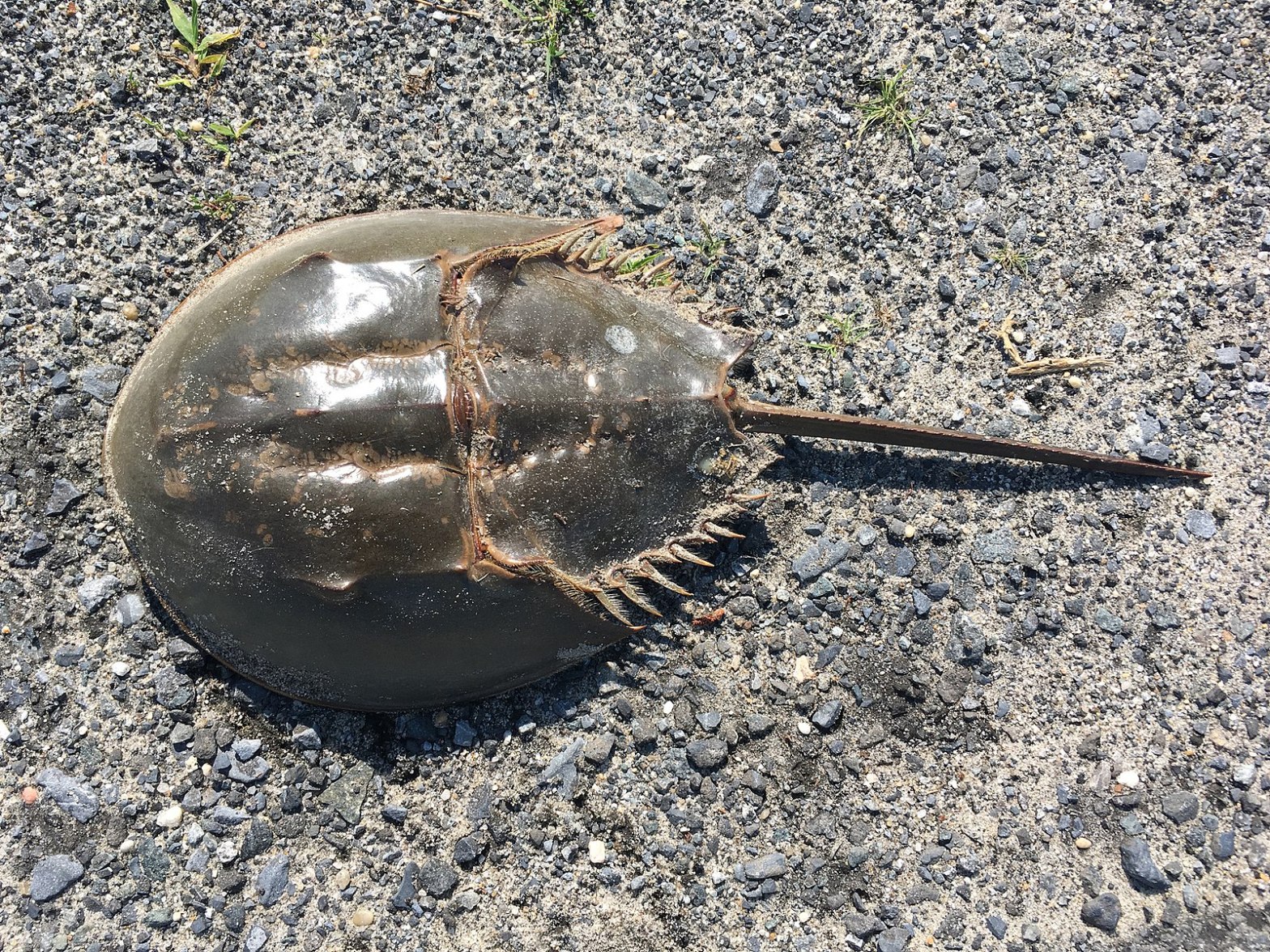
The horseshoe crab is one of nature’s oldest fauna, claiming a history that stretches back 250 million years to the early Triassic. For dinosaur fans, that means that a stegosaurus, famed for the gaudy kite-shaped plates on its back and spiked tail, might have seen horseshoe crabs while stomping along a Jurassic era beach. I don’t know if that fills you with wonder, but it amazes me.
This is why every year, if I happen to be in Branford during the full moon and high tide in May or June, I head down to a couple beaches to count horseshoe crabs. This is the time of year and the occasions on which they crawl up to the beaches to mate. The full moon makes it light enough to see the crabs, and the tide means there’s just a little band of beach on which to look. It’s not difficult.
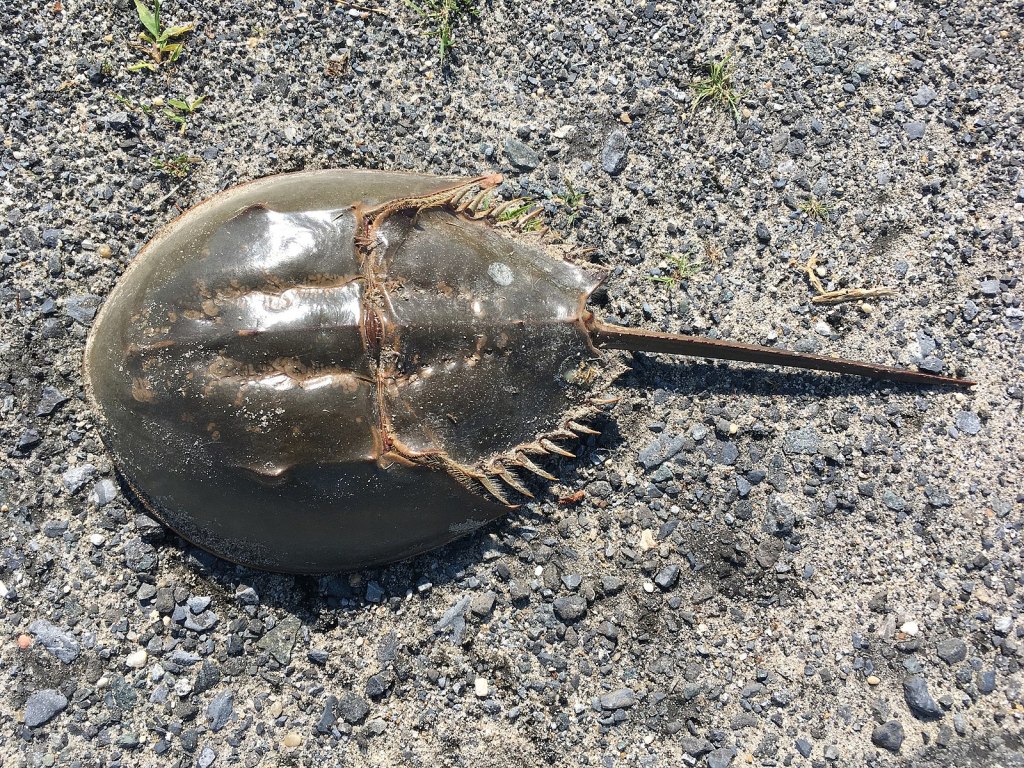
I’d missed 2024 — I’m not sure where I was, probably traveling for work — but the year before, action on the beaches was light — two pairs on each of the two beaches I surveyed. Before that in 2023, it was two pairs on one beach, and four on another.
When I was growing up and carrying out this practice in the 1980s and 90s, there were so many horseshoe crabs it was difficult to keep count.
Mine is one anecdotal account, but you don’t need to rely on it to understand horseshoe crabs are in trouble. The acidification of the ocean, warming oceans, predation by other species that depend on the horseshoe crabs and (worst of all) harvesting by the biomedical industry — the horseshoe crab’s blue blood has strange and beneficial medicinal utility — all conspire to create a dangerous and potentially extinction-level challenge for this ancient species.
***
What does it mean, to lose the horseshoe crab locally? It doesn’t do much for people who spend little time at the beach — at least not as far as they can see. Unless you’re a bird or a fish it’s quaint at best, and alarming at worst; while its claws are too weak to deliver anything more inconvenient than a light pinch, the horseshoe crab is actually a distant relative of spiders, ticks, and scorpions, and attracts with its shape and its shell some of the instinctual revulsion we reserve for those loathesome creatures. Even crabs and lobsters can make for good eating. Maybe not if you’re pulling them out of Long Island Sound! But in general.
Losing the horseshoe crab in Branford may not affect the crab’s long-term prospects. It has survived several extinction events, and under different circumstances. It’s entirely possible that the departure of the horseshoe crab from Branford’s shores is a temporary situation, something that lasts hundreds of thousands of years — the briefest of flashes in the creature’s unfathomably long lifespan.
But losing the horseshoe crab — like losing the American chestnut, and the elm tree, and other large, old trees that used to be mainstays of the community — like losing monarch butterflies and wild bees — is part of something bigger, something that’s accumulating. Gathering momentum. The old, quiet way of life, where you could walk down to the beach and run into an animal from another epoch. We’re losing our community, is what’s happening. And what’s replacing it is far worse. Smartphones, AI, algorithm, and fear of the neighbors we no longer encounter on the road or when we do, are buried in a screen or listening to music on headphones.
It’s not just the horseshoe crab that we’re losing; we’re losing so much more. What will replace it, when the last crab surfaces some year soon, regards the empty beach, and returns to the sea? And what will we do, when at some point we run out of things to lose?
 The Local Blind Spot