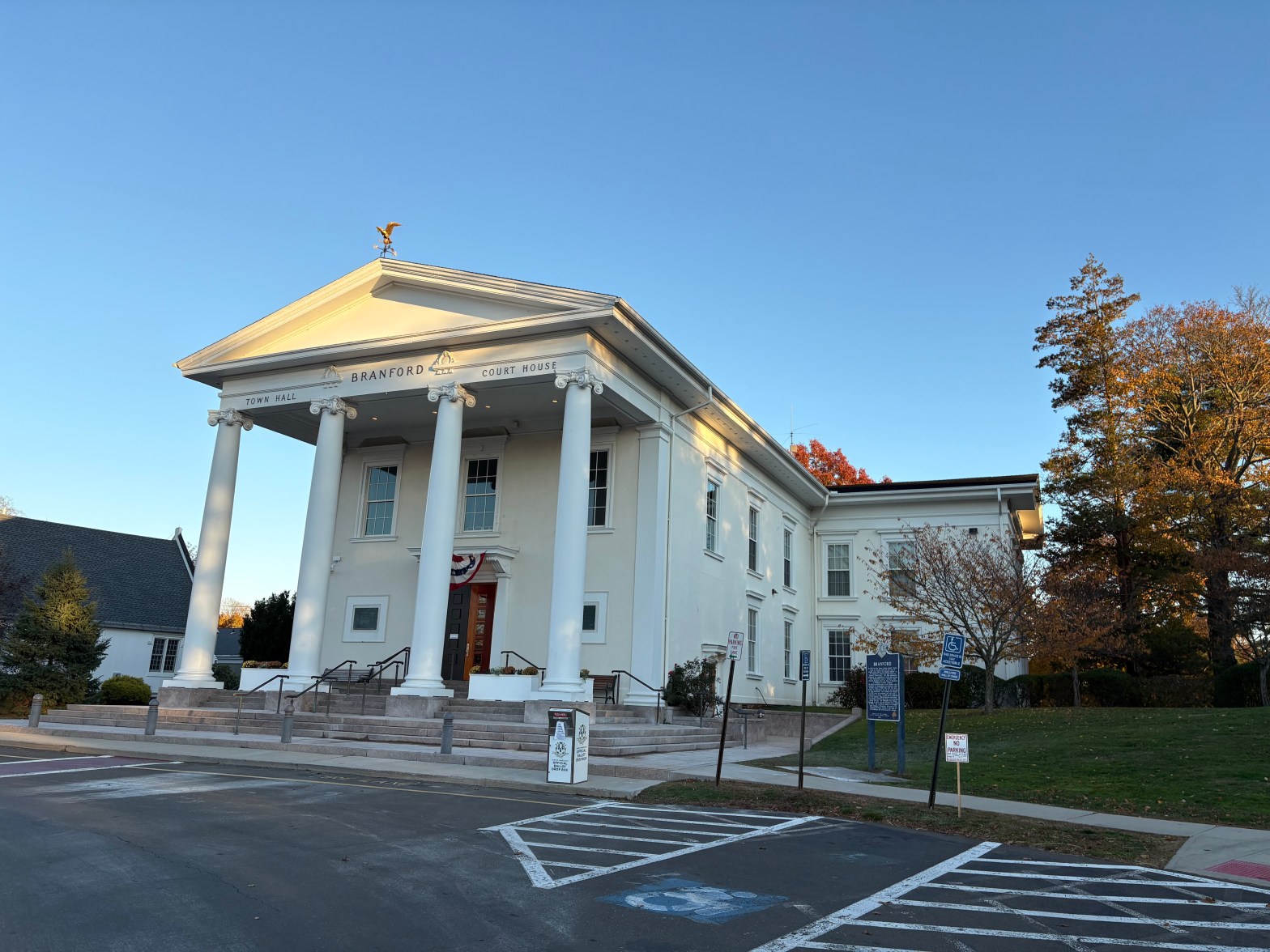
During the election for first selectman, Josh Brooks made an interesting pledge. “I am proposing to freeze property taxes for qualified Branford seniors,” he wrote on his campaign website, and shared on social media.
Is such a plan feasible? Yes — other towns have already implemented some version of it. In fact, Branford has an interesting mechanism in place already that protects senior citizens: seniors can elect not to pay their property tax while alive. After they pass, the property taxes that are owed as the result of nonpayment are collected from the estate, essentially functioning as a type of lien. But the intent of Brooks’ promise is clear: elderly Branford residents don’t need to worry about property taxes leading to losing their homes. That’s a big deal.
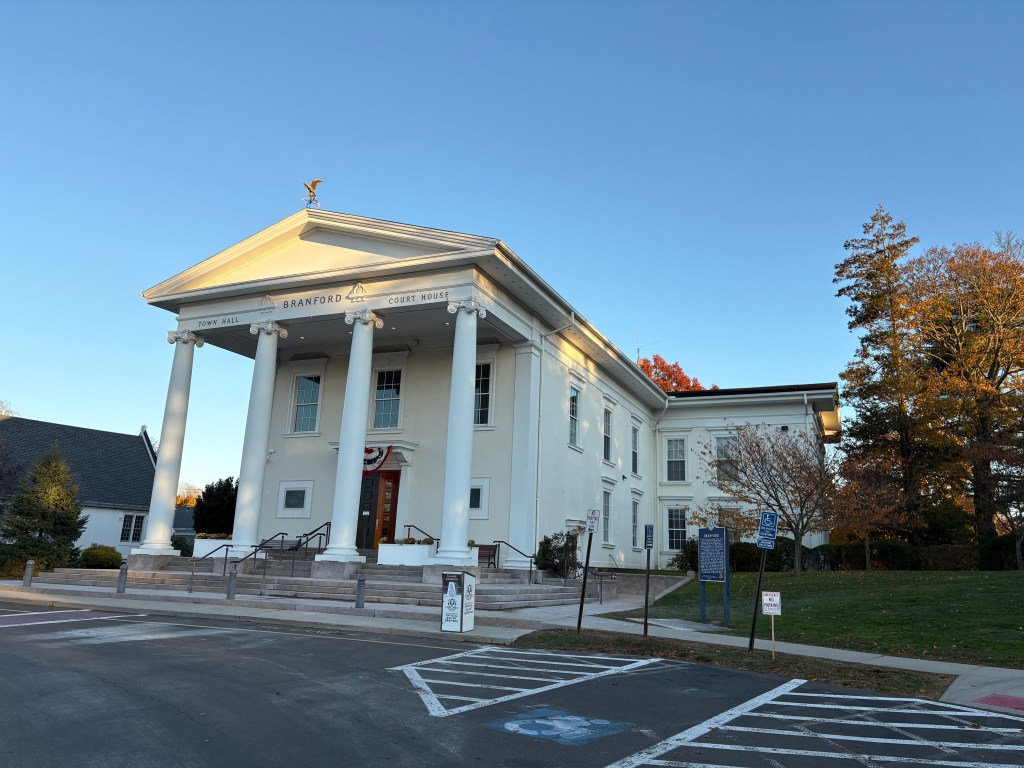
The senior tax freeze could take the existing policy to another level. The idea, as I understand it, is to cap a property tax rate for eligible senior citizens so that while taxes on Seniors’ property could go down, they wouldn’t ever increase as the result of market fluctuations.
For folks on a fixed income who watched in horror as their property taxes shot up in 2024 by 20% or more despite not having made any improvements to their homes, that’s a big deal. Many homeowners were stunned — normally, the reval doesn’t result in anything near that rate. People moving to Connecticut in the wake of COVID plus other variables contributed to that spike in home values. In other words, forces beyond any individual’s control conspired to make it harder to sell and buy housing in Connecticut.
Some residents were unbothered. If you were flexible about employment, and of an age when moving to another state wasn’t a big deal, you might have bought a house for $350k in 2015, then sold it for $600k in 2022 and moved to Kansas or Minnesota and been able to buy the same amount of house outright in a different place with the profit. That’s one of the advantages of living in the United States — the border between states is often more of an opportunity than an impediment to progress. At least, if you’re mobile, and at a point in your career where such mobility makes sense.
But for elderly residents, there weren’t many good options. Particularly for those folks who had a sentimental attachment to their home — it was in their family for a long time, or their grandparents built it, or it was their forever dream house — even though the money was right to sell in 2023 or 2024, those same pressures sending the price of your home up meant there were few (if any) good options to buy. For folks who were living in Connecticut, the spike in housing prices was across the board, so selling for a higher price also meant buying at a premium if you had to stay local, minimizing or even nullifying the advantage of a move.
Branford’s current policy is nice, and decent, and certainly in the correct spirit when it comes to taking care of its oldest citizens. But Brooks’ proposal offers an interesting expansion on the idea. What if, rather than simply accommodating seniors (a nice thing to do) by promising not to kick them out of their homes, the town offered a financial benefit — certainty on their property taxes — essentially, a bonus for their spending a significant portion of the productive part of their lives paying property taxes in the town, and contributing to its prosperity?
I liked the idea when I first heard about it, and I like it now. It offers seniors a kind of dignity that the current arrangement lacks. Rather than saying “we’re not taking your money now, we’ll take it after you die” like the ghoulish children of some Victorian aristocrat in a Dickens novel, Brooks’ new proposal seems to be angling at something more like “Over the past few decades, you built the town we live in today — now let us do something for you.”
And it won’t — in whatever shape it takes — do away with the requirement to pay property taxes. Folks will still pay tax! It will just cap it at a reasonable place. Maybe the age ends up being 70, or 75. Maybe the residency requirement ends up being 30 years. So you know, with the Branford ordinance, that when you move to the town and buy a house in your 30s or 40s to raise a family, that when you’re older that you will never pay a higher property tax rate than whatever the number is when you turn 70 (or 75). And of course, if property taxes go down, yours will as well.
That’s certainty, that’s stability — that’s peace of mind. That’s a compact between the town and not only its oldest and most committed long-term residents, it’s also a compact between the younger residents and the older generation. The elderly have always been held in high esteem in New England; this represents a welcome return to that tradition.
What about the downside? The town will receive less revenue. At a moment when commercial activity has withered in Branford, and the fewer companies who have stuck around in the town are paying less tax, more and more burden is falling on residents to make up the difference. This is something to consider, and folks ought to examine the question at length before committing to any particular plan. As far as I understand it, finance is like farming in one regard: certainty is the most important component. Even if rain only comes once a year, if you know that, you can find ways to offset the dry periods, and find crops that grow under such conditions. Similarly, if the Board of Finance knows upfront that there are limitations on the taxes they’ll raise, they can come up with plans and schemas to account for those limits. Maybe certain projects will be built more slowly, or on a longer timeline.
The details remain to be worked out. But I’m looking forward to Branford’s RTM picking up the issue and giving it the thorough consideration that this project deserves. It’s the sort of thing that will bring the right type of citizen to Branford, and not for a little while — for the long haul. I hope it comes into being.
 The Local Blind Spot