Last year, in 2025, I was in the final year of my two terms with Branford’s RTM. A proposal came before us, which was debated. The proposal, by the Branford school superintendent, was to bring electric buses to Branford and replace the old fleet of gas-powered combustion engine buses.
As I recall, one Republican stood to speak against the measure, a principled young man named Joseph Lofredo. I think more than one Republican voted against the measure. I’m sure Joseph did. I and the Democrats (and some Republicans) voted for the proposal. I believe I stood to speak in favor of the measure.
I invited Joseph out for beers afterwards at Thimble Island Brewery and we chatted about the issue, and other issues. I heard some concerns of his that hadn’t made it to the floor, and of which I wasn’t aware. He heard my side out. While we didn’t ultimately see eye to eye about EVs and buses in particular (we did agree about other issues, such as the importance of a strong moral education for children, such as that practiced by him as a leader in the Boy Scouts organization), the conversation was characterized by respect and a willingness to consider different sides and perspectives.
This is how politics works: the different sides talk, and do what they can to find a middle ground. When one side inevitably comes out ahead in the vote, it’s still important that the other side gets heard, and to the greatest extent possible that there is understanding, there is harmony. The democratic process isn’t just a mechanism for decision-making that we embraced centuries ago, which tends to produce better outcomes than unilateral decisions — it’s an obligation, using utilitarian methods, to create consensus when it comes to spending, policy, law, and all other decisions by a polity.
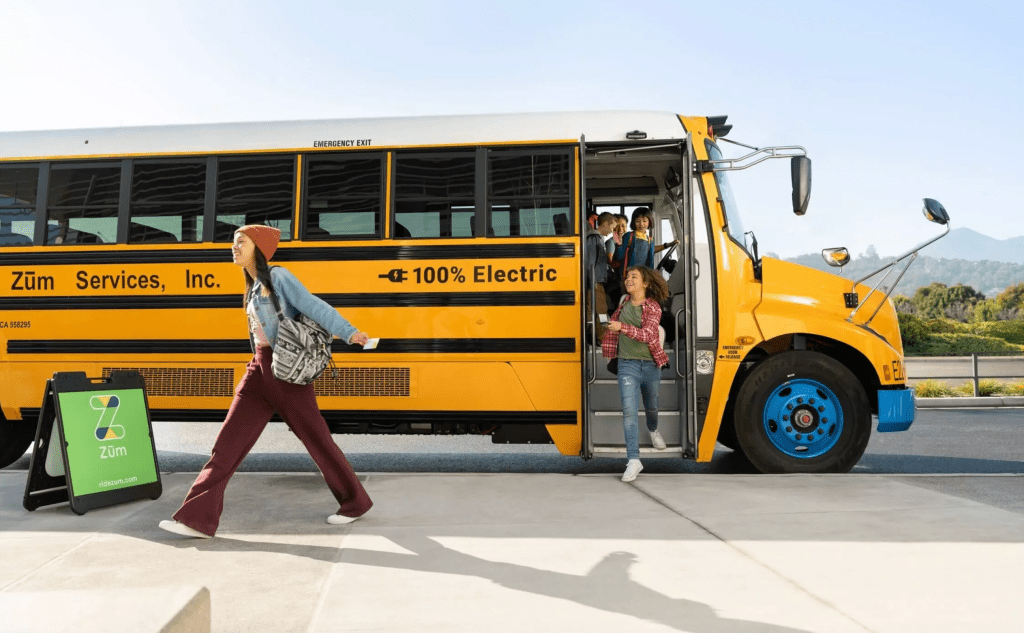
The arguments against Branford’s electric buses come from all over — they come from within Branford, as evidenced by the town representatives who voted against the contract to use EV buses. They come from around the state — people who don’t live in Branford but don’t want electric buses in their towns. They come from around the country, and even internationally. Social media is a lightning rod, and anyone anywhere who has a bone to pick with EVs is incentivized to strike.
What are the arguments against Branford fielding EVs? First, that EVs are expensive, and EV infrastructure is expensive. Second, that EVs are dangerous — they can catch fire. Third, that they’re an unproven technology. Fourth, the components of EV batteries are mined immorally or exploitatively. There are other arguments that relate to these four — the risk of unproven or dangerous technology, the ethics around mining the resources that go into electric batteries, or the expense. But ultimately, these are the arguments, and they exist almost entirely on what I would describe as the Republican right.
What are the arguments in favor of Branford fielding EV buses? I know because I made them. Combustion engine buses can also catch fire (if you don’t believe me, search online for buses catching fire before 2010, you’ll find a horrifying wealth of examples). In one important regard, pollution, EVs are safer than combustion engine buses; some argue that exhaust technology has gotten better, but better than piping exhaust directly into the cabin where kids sit still leaves a lot of room for improvement, whereas EVs have no exhaust, and produce no inhalable pollution from running.
While I wouldn’t say quite yet that EVs are a “proven” technology, they have been around since the 1980s. Calling them a developing technology doesn’t seem like it does the system of building and maintaining EVs justice, but it would be a lie to claim that they’re near combustion engines in terms of the knowledge we have around what can break and how to fix it. In terms of expense, while it’s still early days, fixing or maintaining EVs shouldn’t be much more expensive — for routine maintenance, it’s actually cheaper to fix EVs, but for collision repair, EVs cost more.
The horrible conditions under which components are mined for electric batteries are the same as those mined for chips and components used in computers, smartphones, and data centers, which presumably are being used by the very people objecting to EVs to lodge their EV complaints online.
There are another two arguments in favor of investing in EVs and EV infrastructure in the form of renewable energy which I didn’t make at the time, but which have become obvious to me (and to others) in recent months. Both arguments come down to national resilience and individual independence.
The first additional argument goes like this: oil and gas prices will always be dependent on external forces. Just to run an automobile, yard tools, or generators, one needs a steady supply of refined gasoline. When war disrupts a system designed for optimal efficiency, the supply of gasoline becomes more expensive — potentially, prohibitively so. EV infrastructure and EVs draw on electricity that can be generated at home, via solar panels with assistance from home batteries, or via a mix of energy sources including wind and nuclear. Being totally dependent on oil and gas as a nation, as a state, as a town, or as a person is taking a remarkable financial risk.
The second additional argument, related to the first, is that so long as we allow China to dominate this market (and they unquestionably do; they sell EVs at 1/3rd the price of the cheapest available U.S. models that have twice the range. I’m not making that up), we’re putting ourselves further behind China strategically. China dominates battery technology now, they dominate solar panel production, and they’re beginning to dominate electric vehicles. That means their dominance is stretching into infrastructure and expertise — two fields where for decades the U.S. has held an insurmountable advantage.
By arguing against EV adoption in the U.S., people are making Americans more dependent on oil and gas markets, and weaker than our principle geopolitical rival, China. They are handing China the future.
I sincerely believe this. If EVs were a totally unproven technology, I’d be unwilling to put children into EV buses. If EVs were vastly more expensive, I’d be hesitant to buy them. If there was a real ethical concern about mining for the elements we use for our everyday lives, and there was something not buying EVs could do about that — again anyone using a computer or smartphone to argue against EVs is doing a bad job of taking their own advice — I’d pause before supporting EV adoption, and specifically with school buses.
But this is the future. The more we lean into it, the more competitive we’ll be economically with China — not just here on earth, where oil and gas are plentiful, but also in space, where the Trump Administration would like us to go using private companies such as SpaceX. There is no oil or gas in space, there’s solar energy.
The Chinese have taken the lead in this crucial field nationally — meanwhile, as individuals, those people who neglected to buy EVs when they could are watching gas go above $4 per gallon for the first time since before COVID. It’s going higher. That’s not the future, that’s the present.
I’m in favor of supporting EV infrastructure, and renewables such as solar panels and home batteries. I’d like those to be manufactured here in the U.S., using minerals mined by U.S. companies, and refined by U.S. concerns. I’d like us to be global leaders in this technology, so that citizens can feel good about buying and outfitting their homes with cheap renewable energy to supplement power created and stored on the grid. I’m proud that Branford did its part as a town to drive our state forward, and I hope more can be done to deliver on the quintessentially American promise for decentralized power to the town and ultimately to the citizen level.
 The Local Blind Spot