Last year, even before a presidential election that was extremely unpleasant (both in its conduct and outcome), I had resolved to leave Twitter. Under Musk, the platform had become an unflushable toilet bowl filled with lies, insults, slander, propaganda. Mistruth after vomitous mistruth piled up in Twitter until that’s all one could see. After months of struggling with the reeking heap, I decided that for the sake of my own honor and integrity, I could no longer contribute to it. By mid-November, I’d stopped posting, and moved over to Bluesky.
This mirrored another slow move I’d been making on social media. In 2023, while in Ukraine, I deleted my Instagram account. At the same time I ratcheted back my posting on Facebook. I’d get much less traction on essays I posted, and posting them often led to the people who seemed to get the least out of my writing logging on to give me grief about it, or take exception to claims I made. I don’t have a problem with people disagreeing with me, so long as we can all agree on the facts. But these were people I knew explaining to me things I knew to be untrue — telling me obvious lies such as Russia had invaded Ukraine because of NATO, or that we were winning in Afghanistan until Joe Biden decided abruptly to withdraw U.S. forces.
To replace my posting on Facebook, I got more active on another network — Nextdoor. Commonly roasted on Twitter and other social media sites as a hotbed of bourgeois reactionary boomerism, on Nextdoor I found something I hadn’t really expected. Posting mostly about the garden or walking my dog — very commonplace and “local” ideas and ideals — my posts attracted interaction from a lot of neighbors, some of whom I knew, some of whom I didn’t.
Photo about some work I did cutting back an infestation of burning bush in a local Land Trust territory. It got a bunch of likes on Nextdoor and one crazy person compared my work on the trees with killing swans!
Now people come up to me at public events and tell me that they enjoy my posts on Nextdoor. It used to be a person might hear about something I was doing or see an essay on Twitter or LinkedIn or Facebook and tell me that they’d seen me on social media. Now it’s a person coming up to me at a colleague’s retirement party in New Haven and saying: “I enjoy your Nextdoor posts!”
This was the promise of social media. That activity and networking online would enhance things offline. Shopping would be easier. Friendships, more meaningful. Our lives would become more transparent to others around us in ways that added to both. We’d be sharing joys and experiences, and bettering humanity. For a while it seemed like that’s what was happening. If it was ever the case — I don’t remember, it was so long ago — it is no longer, especially on the platforms I’d been slowly and then abruptly abandoning.
While it’s easy to blame politics or culture — Musk’s purchase of Twitter, which I’d used to share stories and essays with readers and network with journalists; Zuckerberg’s rightward turn with Facebook — but it’s also that any time one invests too much time and effort into “building a brand” or establishing some sort of identity in an institution over which one has no control, fundamentally, one will end up losing. Facebook and Twitter are giant companies, whose ultimate goal is not to facilitate community or connections — it’s to sell their users on something. Maybe that something is advertising, maybe it’s a political or ideological vision of the world. Ultimately it’s not up to you, the social media user. It’s up to the people running the platforms.
Having said that, you have agency. The answer to places such as Twitter and Facebook becoming less usable, less friendly, is to use other platforms. Either stop using Twitter and Facebook entirely (as I said, I deleted Instagram, have deleted TikTok and am barely active on Twitter beyond logging in once a day or so to make sure nobody’s hacked my account) or pull back — and use other social media platforms instead, or none. As a writer and sometime journalist, I use Bluesky now instead of Twitter, and haven’t noticed any significant dropoff in readership or conversation. I use Nextdoor now instead of Facebook and what I lose in international reach, I’ve more than made up for in terms of connecting with neighbors. My social media life overall, I would say, since moving away from Twitter and Facebook, has improved. That’s not nothing.
I still haven’t found a replacement for LinkedIn, and I’m not certain that there’s one out there. Because I am happy with my job, I’m not really in the market for a replacement. And once one gets past the flood of drek from LinkedInfluencers, it’s pretty good for finding job opportunities and sharing analysis. I can’t complain about the place.
Folks, things have gotten better for me! If social media has you down and you’re on Twitter and Facebook, change things up. Leave the old, be a part of reinventing the new. And expect that when Bluesky and Nextdoor change and go awry — everything does eventually — there will be a new place for community to gather. Flexibility and adaptation is the human way. In an era of climate change and war, nothing could be more natural.
There are people who want the United States to have secure borders. Few of them understand what such a project would cost, and fewer still understand what goes into border security.
My home town is considering spending $20 million to renovate our police station. From flood control and mold remediation to a bigger locker room for the growing number of women on the force, to a fence for the parking lot and an indoor firing range and more, the town hopes that this hefty investment will mean the station doesn’t require further money years from now. $20 million for peace of mind for the police for a couple decades, and peace of mind for the police is peace of mind for citizens.
A few years ago the number that was estimated for these renovations was $5 million to $7 million — as recently as October of 2023, the expectation was that the bill would come to $10 million to $13 million. Labor’s getting more expensive, and so is the cost of materials.
All this to effectively headquarter and base 56 police officers for our town of 28,000, size: 28 square miles.
Why am I talking about my home town’s police station in an essay about border security? To add some context to a discussion that rarely penetrates further than an idea. Ideas are always different from implementation — one reason communism failed so spectacularly in the 20th century. When the original architects of the police station imagined how it ought to look, for example, they didn’t take into consideration how water would flow downhill and into the station’s basement. They didn’t imagine the growth of women on the force, or how policing itself would change, making it difficult to modify the existing station without spending lots of money.
Here’s what people who are arguing for border security say, and why what they say is far less practical than they’d have you believe.
#1: Border security is simple, all countries do it
Border security is complex and costly, which is why countries over time try to reduce or eliminate as much of it as possible. It costs a lot of money to train personnel, field them, and administer them properly. It costs money to pour concrete and fabricate and install fencing and surveillance — money that doesn’t come back, sunk costs you’ll never retrieve.
Up to a certain point, border security is necessary. But one is always grasping to reduce it — to do the minimum necessary. This is why states in the United States of America tend to reduce border security to collecting tolls for the use of their roads, and why one of the first things the European Union did was to take down the customs checkpoints that used to crisscross Europe when I was a young adult.
You don’t spend money surrounding your country with fences and walls unless absolutely necessary, because otherwise, it’s wasted money — twice over, the money you spend, and the money you lose when people do business elsewhere because it’s such a hassle and pain to get into or leave your country.
#2 For thousands of years, countries have done border security
Comparisons that reach back thousands of years are tricky, and almost impossible when it comes to conceptions of citizenship and migration. Prior to the 19th century countries didn’t worry much about people coming into their country or leaving it — linguistic barriers, cultural barriers, and a far higher bar for leaving or entering societies that largely depended on kin groups dissuaded widespread migration. When we’re considering the modern problem of border security and migration, we must acknowledge that we’re really only looking at countries and nations over the past 200-250 years.
Nations, empires, and kingdoms of the past were concerned primarily about their borders in military terms, rather than as physically defined legal spaces affecting where citizens of various countries could or could not go. The Great Wall of China was built and garrisoned to protect China from raiders to the north (it famously failed to accomplish this modest task). Hadrian’s Wall and the Antonine Wall were Roman attempts to do the same, against the native tribes of northern Britain and Scotland. These were not fortifications designed to keep merchants or travelers out — countries were not very interested in who was traversing their land, unless that who was working for a hostile power.
Not only were kingdoms and empires generally unworried about foreigners coming into or going out from their domains provided that those foreigners weren’t bent on conquest, they often recruited skilled experts or even unskilled laborers to build or settle — this is how the map of Europe circa 1900 came to be so speckled with German settlements. There is to this day a population of Germans residing in Romania (much smaller than they were in 1945), some of the people who were invited to farm and protect what were then Hungarian lands in the Carpathian mountains, centuries ago. Modern day fans of horror know this region — Transylvania — for the mythical vampires that inhabited these German-built castles. It’s also how Yale and the University of Michigan, Ann Arbor came to look the way they did — expert Italian stonemasons brought over to build in a style that American workers could not, many of whom subsequently settled in New England.
Before the 19th century, few kingdoms or countries worried much about who was living or working within their territorial borders. They worried primarily about borders in military terms.
Some ancient or pre-modern states did actually worry more about border security more than usual and in terms more or less comprehensible to modern thinkers. Those that would presumably be held up as examples by the people in the U.S. talking and thinking about border security all collapsed shortly after focusing on committing to controlling or policing who lived inside their borders. The act of fully committing to border security seems to correlate with kingdom or empire collapse. While I can’t claim a causal relationship, it’s worth noting that when a nation or people or kingdom focuses their treasure and energy on building walls and actively patrolling their borders, that seems (for whatever reason) not to lead to more productive outcomes, culturally, socially, and economically, let alone militarily.
TLDR; for thousands of years, states have done border security as little as possible. When they do sometimes focus maniacally on securing and militarizing their borders, they often end up collapsing (often violently) and disappearing soon thereafter.
#3 Border security won’t break the bank
I’ve done border security — on the border between Afghanistan and Pakistan — so know something of what goes into the process. For the type of tight border security required by people serious about border security — for a *militarized* border, here are some of the requirements.
An area covered by lines of barbed wire, fencing, lights, surveillance cameras, and, ultimately, a physical wall. That area should have a depth of at least 100m, and ideally more like 300-500m. Think about that band running along the U.S. border with Mexico and Canada.
Sufficient personnel to patrol that border; every portion of the wall ought to be physically patrolled (to supplement cameras) by team-size elements, with larger groups standing by as QRF. An obstacle isn’t an obstacle if it’s not observed, and even the most sophisticated fixed or drone-mounted cameras are only *deterrents* — for security one needs armed border guards. How many guards would be needed? An army’s worth. In the hundreds of thousands. To say nothing of those required to patrol the waters that also make up a large portion of American borders. Don’t believe me? We had 300 soldiers in Afghanistan along a mountainous 40-mile-long border and might as well not have been there in terms of how many people we were able to disrupt. Of course, we weren’t trained for border security — we were trained for airfield seizures and offensive operations, and, to a certain extent, counterinsurgency. Border guards require their own training and administrative apparatus.
A band of 20-25 miles free from habitation that is essentially defensible / prepared terrain, in which to conduct military exercises. A “militarized” border is a border the military is prepared to defend, and that preparation means moving all civilians out, and creating space in which units can conduct defensive and offensive operations.
A much beefier law enforcement set within 25-50 miles of the border, both the land borders with Mexico and Canada, and every inch of coastland. This zone will require special identification, and people living there should be subjected to frequent and random searches, both of their persons and their homes — this area of border, while not militarized, will be where people covertly flying, tunneling, beaching, or being smuggled into the country will arrive, and it is there that anti-immigrant policing should focus much (though not all) of their efforts. And yes, as soon as it becomes very difficult to bring people into the country, there will be a huge financial incentive to smuggle people into the country, so the country will have to take that threat seriously.
1-4 (especially 4) will require changes to important laws, including but not limited to rights guaranteed in the Constitution (most obviously the 3rd, 4th, and 14th amendments).
Considering these points, which are preconditions for true border security — not false or incomplete border security (incomplete border security being a dangerous illusion, or a lie), what would be the costs? At least tens of billions of dollars per year to maintain, and hundreds of billions or more to build. To become completely, perfectly secure, we’d need to invest a ton of resources, labor, and ingenuity in that one specific task, securing Alaska, the Continental U.S., and Hawaii.
One likely objection, easily dismissed
is that the U.S. only needs to secure / militarize its southern border with Mexico. Of course, once that happens people will simply go in through Canada, which lacks robust border security with the U.S. and also around its own territory. My friends and I used to cross over into Canada illegally while boating on the St. Lawrence River, not through any malice or deliberate attempt at mischief but because we were on jet skis and not paying close attention to where we were. A border that is not patrolled will quickly become a route by which people make their way into the U.S., no matter how unlikely it may seem to people at present. There were tens of thousands of border crossings on foot by Afghans and Pakistanis near where our post was, and that was at 8,000 feet above sea level, in the mountains, without roads. What seems like an insurmountable impediment to a person living in suburban comfort is a mild inconvenience to a dedicated migrant.
Pleasant beachfront property along the Atlantic and Pacific oceans will become a space that is subject to frequent patrols by uniformed border guards and searches and surveillance by law enforcement.
It is possible to secure the U.S. border and militarize it — though the cost would be great, perhaps even greater than the cost of colonizing the moon or Mars. And there is a further cost to doing business that way; when one becomes focused on security, and walls, one atrophies as a culture — one begins looking inward, rather than externally, for answers and opportunities. While this might be satisfying on a spiritual level, for a country such as the United States — a nation built on connections and commerce, dedicated to profit through trade, and the free, meritorious exchange of capital — such an evolution would be a serious blow, perhaps even a fatal one.
Border security is a contentious political issue, not only in the U.S., but also globally. Countries have become increasingly concerned about controlling their borders, and in ways that are very new, relative to the age of civilization. When one considers the costs (money, creativity, flexibility) against the benefits (the halt of almost all illegal immigration), it’s difficult for a reasonable person to conclude that a “militarized border” and border security the way advocates mean is truly a worthwhile endeavor. Unfortunately, I doubt very much that this will stop people from complaining about it as an issue. After all, it’s easier to complain about a thing than to fix it.
1937 was not one of humankind’s better years. The Japanese invaded China and set about massacring POWs and civilians. Warplanes with the Nazi German “Condor Legion” bombed Guernica on behalf of nationalist (fascist) Spain , part of a brutal civil war raging there. Amelia Earhart disappeared over the Atlantic, the Hindenburg airship exploded, and striking workers were killed by police in Chicago. In the USSR, Stalin began a characteristically brutal and counterproductivepurge of officers in the Red Army.
It also marked the death of Clarence Barbour, at the time, the 10th president of Brown University. This distinction alone would have been sufficient to mark him out for memory. In the fullness of time, history revealed him to be significant for another reason: he was the last graduate of Brown to be its president, and the last clergyman to be president of any Ivy League university.
That last bit is more consequential than one might think. While people today have come to see Ivy League university presidents as scientists, administrators, and scientists or academics, that is a comparatively recent phenomenon. From the middle of the 17th century through the middle of the 19th century — 200 years — the opposite was true, with a background as a practicing clergyman being practically (if not legally) a requirement for university leadership.
In fact, of the 172 people to lead an Ivy League university (Brown, Cornell, Columbia, Dartmouth, Harvard, Princeton, UPenn and Yale), 77 of them have been clergy — a whopping 45%. The breakdown skews more dramatically the older the school in question — 60% of Harvard’s leaders have been clergymen. The number is also 60% for Princeton — its first non-clergy president being none other than Woodrow Wilson. 52% of Yale’s presidents have come from the clergy. Those older schools have more leaders on which to draw, more data points, purely by virtue of there being more time for leaders to emerge (too, one should consider the comparatively shorter lifespan of a person living in the 17th, 18th, and 19th century).
That all came to an end — a final end — in 1937, with Dr. Barbour.
People thinking about faith in the context of 1937 will also likely recall Father Coughlin, a popular figure on the radio who spoke a lot about faith in the specific context of Christianity and nationalism. In spite of auspicious beginnings as a broadcaster, he eventually went on to express sympathy for Hitler and Mussolini, and promulgated a virulently anti-semitic world view. Coughlin’s is not the sort of faith I’m talking about.
A great deal of the longevity of the ivy league president as clergyman can be attributed to the amount of time the Ivies have been around —Harvard began functioning in the 17th century, and the school we call UPenn today had three decades in the 18th century as something less than a college, during which time its only non-clergy leader, [the only non-clergy leader of any Ivy League school before the 19th century] was no less illustrious a figure than Benjamin Franklin. Columbia began as King’s College in the 18th century. Yale, a small school in Old Saybrook at the beginning of the 18th century.
Another thing that needs to be taken into consideration is that the students studying at Ivy League universities which were led by clergymen up until the mid-19th century (or, in Brown’s case, the mid-20th century) were all male until the 20th century. And the clergymen were, well, clergymen, not clergywomen.
University leadership has changed to reflect the priorities of the students at those schools, and also to mirror the faces and give voice to the various ethnic, cultural, and religious (or irreligious) identities there. Who counts in the USA has changed since 1637, dramatically. The Ivies have changed (they were not even Ivies at first, they were simply places that people could continue their studies beyond secondary school).
The arguments in favor of continuing the modern habit of appointing administrators, faculty, business leaders and researchers as presidents of the most powerful and prestigious American universities are overwhelming — so much so, I’d say, as to be almost irrefutable. Likewise the arguments against replacing the current model with the model before — clergy — are quite compelling.
But here we are, nearly a century later, and it’s time to reevaluate the decision to break with tradition. Not in the sense of “change our minds about,” but simply look at the decision in plain terms, to consider — understanding that the decision was made a long time ago and not in any kind of organized way — whether things have on the whole been better than they would have been otherwise. The Ivy League universities (the powerful and influential universities) that beginning in the mid-19th century and continuing through to the mid-20th century replaced religious and faith-based leadership with secular professionals was done without fully appreciating the consequences. We know this to be true because no decision taken in the present can fully account for its impact on the future.
The future of the people who decided that the Ivies would not have clergy for presidents is our present, and the present, when it comes to Ivy League leadership feels… subpar. Doesn’t it? I can’t be the only one. I live outside New Haven, a graduate of Yale, a former employee there (I left in 2023 to train Ukrainian soldiers prior to their counteroffensive), and have had a near- front row seat to their struggles to find a replacement for the current president, Peter Salovey.
Salovey is probably about as close as one can get to a secular university president who emulates the impact of a president drawn from the clergy — someone who has always been interested in the purpose of a student’s life, the end to which they turn their education on human, if not spiritual, terms. He has been effective as a fundraiser, accessible to students and faculty during a particularly turbulent time, and a capable administrator. Yale’s “For Humanity” capital campaign feels very much of a piece with what Timothy Dwight V (a Congregationalist Minister and the president responsible for reorganizing Yale into Yale University) would have seen as the point to a college education. Salovey isn’t a Congregational or Baptist minister, but 200 years ago, he might have been.
He’s also an outlier, in a sense — most of the modern Ivy League presidents are not so touchy-feely, so student focused, dedicated to student wellness in a personal and professional way. Salovey’s predecessor, Richard Levin, was far more typical of the modern Ivy League president. Levin put the wheels in motion that have led to the rebirth of New Haven from a dying industrial city to an upscale and gentrified regional hub for biotech and science. Levin was (and, presumably, is) as much a social and urban visionary as he was an administrative guru, more popular with alumni than students.
In spite of the variety of backgrounds and greater overall effectiveness of the modern-day Ivy League president, something has been lacking in the education of young adults since the practice of appointing leaders from among the clergy stopped. I can speak authoritatively about the past two Yale presidents because I’ve seen and interacted with them and their words for decades. Neither Levin nor Salovey, and no Ivy League president that I have heard of or from in my lifetime, spends much time talking about faith, let alone centers it as a critical component of what it means to be an adult.
***
Something that has been forgotten in the modern era is that faith is one of the core components of a healthy adult society. I mean that in the religious sense, old-timey religion, and in the interests of transparency the way I mean it is faith that Jesus Christ died for your sins, though I’m well traveled and believe that the faith I have manifests itself without Jesus in other religious traditions and for other people.
Faith is difficult. If one doesn’t have a person in one’s life who understands this —a friend, relative, or trusted religious authority — one might go one’s entire life without wrestling with faith or understanding what it is or why it’s worth engaging. If one does not know faith — if one has skipped along its surface like a stone skips across water — even to discuss faith will seem absurd or perhaps obscene.
I came about faith slowly and quietly, almost by accident. It happened for me during a pilgrimage in Cyprus, to a mountaintop shrine to the Virgin Mary, which had been a shrine to Aphrodite in the past, and before that, a shrine to — well, we don’t know the details of the before, merely its outlines. Some fertility goddess.
Meditating in the presence of this shrine, kept up by a monastery of (Greek) Orthodox monks, I came to the understanding that my life — up until that point “faithless,” strictly speaking, contemptuous of faith, fully secular and scientific — had become entranced by a vision of the world that amounted to a logical and rhetorical cul de sac — that it (and I) had become an ouroboros of solipsism, constantly chasing self-satisfaction without real reflection. The mechanism I devised to break out of this endless and self-defeating respite was to decide in that moment to believe in Jesus, the way that I’d been told to believe, the way I’d read about believing, although at that moment, I cannot say that I did — nor do I now without actively choosing to. The word for that choosing, that active belief? Faith.
In one sense, my education helped prepare me for that moment. It must have, because the paths of the past all lead to and through the present. In another sense it didn’t — much of my education frustrated faith, or actively worked against it. At Yale, faith was not stressed as an important component of education (on the contrary, it was actively and vocally derided). Looking back on things I believe this is because few faculty and no administrators even understood faith — or if they did, they saw that as a private matter, not a thing to be described to or discussed with students, and certainly not as a formal part of their education.
Of course there were student groups on Yale, and there are churches in New Haven — my congregation is among them. But this is not the same as attending a university that makes faith a pillar of existence. No, on the whole I’d say my education as a young man was structured to view faith as something bad, or foolish. The texts I read across the years culminated in works written by 20th century writers who’d grown up at a time when religious dogma was the institution, when faith was the inescapable thing. Now, we’re living in the mirror image of that paradigm.
***
Since coming to understand faith, and using part of my energy and willpower each day to maintain it, I’ve been able to see its utility to the individual. As a humanist and a democrat who believes that the utility of anything builds upward from its base, I believe that civilization begins with the individual, and individuals require faith, or some form of faith-replacement.
And we’re talking about faith, real faith. It’s easy to find cheap and ineffective substitutes for faith, things people slot into the space faith would otherwise occupy —all the various diversions the world provides, from hedonism to escapism to radicalism. Faith, spiritual faith, is difficult, it demands something from the individual in return for nothing at all. It’s easy to fake. There are active incentives to pretend that one is faithful while indulging in faithlessness (particularly in places where institutional religion is strong and the powerful are attracted to the clergy over some other pursuit such as business). Faith provides nothing immediate to individual attempting to cultivate a reservoir of faith in themselves.
But the costs of widespread faithlessness are substantial. A nation of faithless citizens cannot muster the collective willpower to make decisions. It cannot trust. It cannot come together for large plans or projects, it cannot win in war, it is capable only of a thin and pitiable existence, masked perhaps by wealth, or resources, or the happy coincidence of living in a country that is, itself, a monument to the faith of one’s ancestors.
***
Common wisdom as well as the fast pace of technological and scientific development state that a modern western secular education is better than any other. Over the past century, institutions such as Ivy League colleges have produced more and at a greater pace than any other system in human history. It has been so productive, if you believe the worst-case scenarios about Artificial Intelligence, it’s possible you could see it forming the end of human education, and maybe the end of history. The presidents of secular universities have presided over this intellectual flowering.
At the same time, flowers wilt and wither; petals drop to the ground to rot and become new dirt for new flowers. Below the surface, fungi and worms and roots and wrestle, producing from bulbs and seeds a new season. What sort of society are we building, what sort of society are we educating, with the current lot of university presidents? With the academics and scientists and financiers and business leaders and generals?
We are not “building” a society at all — we are managing a society that was built, in which people believed (or, in which they “had faith”) and now for the most part no longer do. Now, Ivy League presidents are (per a recent WSJ article) part time administrators, part time mediators, and part time full time fundraisers. For what does one raise money? For an institution, for research, for progress — not for a cause so simple and humble as “faith.”
And yet, faith endures — its absence is not evidence of its death, merely another vehicle by which to grow and expand the bottom line. But every human has within them the potential for faith, even the most faithless, those such as myself to whom faith does not come naturally or easily. Because once one has forced oneself to believe, once one has engaged one’s Will to see what cannot be seen, to embrace that which must be embraced, a whole world of possibility emerges. Once that happens, it is as though the universe’s symphony breaks into harmonious song — everything becomes sensible and synchronous, the cathedrals, the town halls, the public squares and train tracks and missteps — one understands that there is a purpose, and (if not the details of the purpose) that life is organized, somehow, inside that purpose.
As I said, one does not have to experience that faith in Christian terms. I do, because that is how things are for me, but there are many other means by which to adopt and cultivate faith.
For the purposes of this piece, it is important to reiterate here that this was not part of my education. Faculty and university leadership were not men and women of faith themselves, save for the chaplain (faith having been sequestered, named, and certified into its proper place). Students such as myself were — as they are today — left to their own devices.
It was not until I was in the military that I began to regularly encounter leaders for whom faith was not just important but an essential part of their lives — Christian leaders in my Army infantry units, Muslim leaders among our Afghan allies. At the time I could not see the appeal of cultivating faith, though I respected these leaders and warriors for their brave acts of self-sacrifice. At that time I did not believe that faith was necessary for sacrifice, as I, a faithless person, was capable of sacrifice. What I didn’t understand then, but do now, is that to sacrifice over and over, to place sacrifice at the center of one’s life, to lay it all aside for a belief in the possibility of some purpose greater than oneself is necessary for civilization to avoid falling into chaos, despair, fragmentation, and war.
Our businesspeople, our industry, our government, our children, and our universities are sick with faithlessness. Unless we are able to remedy that, we will be very lucky to avoid some or all of those great calamities, if it isn’t already too late. It’s also possible that we’ve gone too far down this road of faithlessness.
In any case, it might not be a bad idea to look at clergy for university presidents in the Ivy League, and beyond. Either to help avert an age of troubles, or, if that’s impossible, to hasten a time after the catastrophe when faith is needed again to rebuild.
If you ask most Republicans and many independents whether they believe government and bureaucracy ought to get bigger at a local, state, or (especially) federal level they will say “no.” Government ought in many cases to stay the same size or to shrink. The most extreme conservatives who are still recognizably part of a modern system believe that the federal government ought only to be responsible for the military, enforcement of laws, and foreign affairs.
Democrats and progressives, on the other hand, support the expansion of government and bureaucracy. They feel that government ought to play a bigger role in supervising and regulating many aspects of modern life, from housing, to health care, to how businesses interact with the environment.
Few Republicans or Democrats in the United States would disagree with this characterization. It is one of the central, defining characteristics of political philosophy here; whether one feels government isn’t doing enough and ought to get bigger (and how), or whether one feels government is doing too much and ought to get smaller (and how).
I’m coming to believe that this isn’t how things work in Branford, my home town.
On the town’s Rules and Ordinances (R&O) Committee, I have some insight into the thinking that goes into the role of local government, limiting or expanding executive power through commissions and committees, allowing government to collect more money through regulation, or keeping the role of government small and unintrusive.
The great struggle on R&O in 2022 was updating the town’s ordinances regarding its tree warden and Forestry commission. This came about because of a freak accident in which a car was damaged and (thankfully) nobody hurt or killed. After many hours of debate and discussion, edits and revisions, R&O was able to update the ordinance in such a way that the town and the Tree Warden’s responsibilities were more clearly delineated. The Republicans felt that maintaining the town’s trees and funding that maintenance was a mistake, as it would require a bigger government and spending more money and could open the town to liability (managing trees means unmanaged trees are still the town’s responsibility), and, in addition, the town had one fine without it up until this point. Democrats (I am one) were more open to the idea of a European-style forest management plan, though that would require spending more money. The Republicans won out; the Tree Warden and management of the town’s trees (privately held and publicly held) looks very much as it did decades ago. Government was not expanded, little or no additional money will be spent.
In 2023, R&O sat to discuss three proposed ordinances: a ban on leafblowers that use a certain type of gas-powered engine, the establishment of a new Fair Rent commission required by the state of Connecticut, and the establishment of a new Harbor Commission.
After discussion among the committee members and the half-dozen RTM members in attendance, and taking into consideration the opposition of several citizens who spoke out against the ordinance prohibiting two-stroke gas-powered motor-powered leaf blowers, the committee voted 3-2 not to bring the ordinance discussion further. So Branford will not have such an ordinance.
I was interested in the discussion, because limiting environmental pollution (noise, chemical) is an important issue — some would even say an urgent issue. The citizens who arrived to speak were not representative of Branford’s entire population, but they were passionate about the subject, and united in their opposition to the ordinance. To summarize their concerns about the ordinance: they felt that the town should not be dictating what citizens own and operate, they felt that the technology of electric leaf blowers and mowers was not sufficiently advanced for such a law. They stated their case reasonably and passionately, and were in general supportive of electric technology, but felt that if the town could ban these devices the town could also easily ban gas powered cars and generators, and felt that other equipment was also noisy and that the town would be compelled to ban that equipment as well. The citizens opposed to the ordinance also were worried about damaging local businesses.
In general, one could say that these people endorsed the view that what one would expect from Republicans or Independents — a desire for the town not to interfere with or intrude on the behavior of responsible citizens.
I am loathe to endorse new ordinances or expand government (yes, as a Democrat), but as a progressive and someone who cares about the environment, I do see the utility in creating some mechanism for encouraging people to abandon inefficient gas-powered devices as soon as practical. We may be reaching the 1.5 Celsius threshold at which global warming becomes irreversible in the short term by 2027, years rather than decades from now, and doing what we can to slow that feels prudent. Not everyone can afford electric cars or electric mowers or leaf blowers; not everyone can afford solar panels. Finding ways to do what we can as individuals and collectively is the only hope we have left, really, and for that reason I was disappointed that the conversation about the ordinance did not continue, especially because I think there might have been ways to reach common-sense accommodation, such as issuing bans while grandfathering existing equipment used by individuals and businesses in.
The conversation next turned to establishing a Fair Rent Commission that is required under Connecticut state law. This Commission must be put into effect by us (Branford’s population is above 25,000) by July 1 of 2023 and requires an ordinance to lay out conduct, so after a brief discussion, the R&O Committee elected to re-refer the matter (to take it up at another time) to give members more opportunities to research the best way to do that.
For the purposes of this essay, it’s probably worth mentioning that the Republicans did not seem enthusiastic about creating this commission. I’m not sure how important it is that Branford have such a commission, in spite of its size. While it seems unquestionable to me that a city ought to have such a commission, that there ought to be a political forum in which to discuss such an important issue (access to housing and food are civilization-killers; more revolutions have been started over injustice when it comes to the former and latter than any other reason), I have not heard people describe the problem of rent in Branford or other towns. This is because, I think, the type of people looking to live in Branford could just as easily live elsewhere in Connecticut, so the market resolves the problem of unreasonably high or “unfair” rents (one can just go a town or two over and save hundreds or more in rent). In any case, support for or opposition to the ordinance is irrelevant, it’s required by the state.
But the last matter before R&O last night — the establishment of a Harbor Management Commission — was very interesting. Branford’s Harbor Master, Vincenzo Suppa, laid out a convincing and compelling vision for establishing a group of expert citizens to help manage our rivers and shoreline (Branford’s, the longest on the Long Island Sound) along a model recently adopted by other towns. He proposed to fund that group and its activities — actions as diverse as the retrieval and removal of sunken boats, to sweeping the water for underwater hazards such as submerged pilings and other dangers to boats and swimmers, to unforeseen catastrophes — by levying an annual permitting fee for docks and moorings (the permits are currently free but largely unmonitored and unenforced), and allowing an enforcement mechanism that could seize unlicensed moorings (which tend to be expensive). The citizens who opposed the 2-stroke engine ordinance and were skeptical of the Fair Rent Commission were supportive, the mayor was supportive, everyone (myself included) felt that Mr. Suppa’s proposal was a good one.
The Long Island Sound as seen from Branford, Connecticut. Although the town has the longest coastline on Long Island Sound, regulation of the waterways and beaches has never been very active or particularly well-enforced. A new commission promises to change that.
What was interesting about it — to me, certainly, and I would think to anyone hoping to create in Branford a consistent approach to policy and governance — was that the same arguments used against the creation of a mechanism for more effectively and efficiently managing Branford’s substantial forests (it’s too expensive, we’ve never done this before, doing this creates legal liability for us in the future, we’re making government bigger, nobody wants people coming on their property uninvited to cut down trees) were totally absent from Republicans when it came to doing something very similar with rivers and waterways. Not a single person raised their hand in protest, or to offer this context. One of the citizens who said that passing an ordinance on leaf blowers could lead to dictatorship smiled and said that the Harbor Management Commission was a good idea. The tenor of the discussion was that we should move forward with empowering the commission with speed, and figure out the details later as we had time. We voted to rerefer and continue the discussion.
My question is this: why do Republicans and Independents, who are in general loathe to expand government in any way without throwing up great obstacles and interrogating every possible potential pitfall, from legal liability to the town, to the objectively miniscule (I’d even say nonexistent) threat of dictatorship at the town level, not see any problems with that when it comes to the waterways and shore? What is it about this hazy idea (not even a plan, really), in which few specifics exist, that so compels and animates action?
As we move forward to empower the town to do something it has not done before during its centuries-long history — an action that I see as useful and necessary, for the same reason I was willing to entertain a ban on gas-powered leaf blowers and an expanded Forestry Commission — I would like to encourage my fellow citizens to ask themselves whether they like big government or small government, and why.
I spent much of my time on the Ukrainian front line between 2015-17 in Marinka. The day after Christmas, 2023, I learned that the town’s remains had been fully occupied by Russia
Christmas of 2023, Russia finally completed its destruction of the town of Marinka. Without Russia’s invasions in 2014 and more recently in 2022 it’s likely that this essentially unremarkable place would have passed through history unnoticed. Nobody of international prominence was born there, and it harbored no special resources or qualities and little strategic consequence. It did have great economic and sentimental significance to the families that lived there, and came (over the course of two years) to mean a great deal to me as I visited and got to know some of the extraordinary people living — can we call it living? We can — in that small and unfortunate place. One in particular had a great impact on me; a man of his time, whom I had the privilege to meet.
It wasn’t until my second visit to Marinka that I met Vasyli. Gregarious and charismatic, with the fashion sense of a late 20th century Italian-American Brooklynite, Vasyli was described to me as an influential character. This is precisely the sort of person I like to meet while traveling for business or pleasure. He had a fruit orchard, the produce from which he distilled and bottled copious amounts of high-quality liquor. He was generous with these bottles. On each of my next four visits, I made a point of stopping in to see him and his wife whenever they were available. I even wrote a poem in his honor:
The Master of Marinka serves his booze,
A spirit that once tasted, none refuse
fermented juice distilled in ancient style,
With fruit extracted from his domicile,
A burning throat at every mouthful quaff
Its maker chases with a hearty laugh,
This whisky is the envy of the land,
All Donbas hails the Master’s artful hand.
If this seems lame or excessive, when you find yourself near the front lines, with the occasional gunfight breaking out nearby and bullets whizzing overhead, should you find someone who makes high quality booze and is essentially unbothered by what’s going on around and refuses all assistance, you let me know how that inspires you.
Vasyli’s back story was this: he’d ended up in Marinka in the mid-1980s, by way of Odesa. As a young man, Vasyli had embarked on a career in making alcoholic beverages, publicly and successfully working his way to the head up a state-run vineyard. In the 1970s, the USSR had invested in the region to compete with Italian, Californian, and French wine — so as not to deprive the communist worker from their own quality product.
The author and Vasyli in happier times, shortly after the author had a couple drinks of Vasyli’s signature home-brewed whisky
Live by the grape, die by the grape: just as the USSR’s nascent wine industry was catching on, Gorbachev instituted the Soviet Union’s version of prohibition. Vasyli and people like him, who’d been heroes just days earlier, became enemies of the state the next. He left in disgrace, but not before watching tractors tear up hectares of carefully-cultivated Odesan vines. He swore then never to make alcohol for anyone but himself, his family, and his friends. His organizational and chemistry skills were put to work at Marinka’s milk factory, churning out boxed milk for children, a far cry from Vasyli’s first great love.
By the time I first visited, in 2016, the milk factory was closed. Everywhere bore the scars of ongoing fighting: the school’s walls and windows were fortified with sandbags; buildings and apartment walls were scorched by fire and blast damage; a lively pigeon-breeding culture involving dozens of or even hundreds of skycutter pigeons had been placed on life support, decaying coops the only evidence of what had once been.
Here is what I had to say about the place and the war in 2017, for The New York Times.
Marinka was one of those places where people had been knocked down by the death of the coal industry in Ukraine, which had more or less corresponded with the collapse of the USSR. When the war happened, people took sides; most of Marinka sided with Ukraine. Russian-led paramilitaries took the town in April of 2014; Ukraine recaptured the town in August of the same year, and retained it until the end of 2023.
When I visited Marinka for the first time in 2016, it was while enroute to Mariupol, a stop between more important places. The fate of the two places has been similar, with capitulation coming only at the end of a brutal and destructive slugging match. Given its proximity to Russia, one can’t help but be amazed that Ukraine was able to hang onto Marinka as long as it did.
Now Marinka is gone; reduced to rubble and ruined buildings, dust, bullets, shell casings, and roving packs of starving dogs; it’s a hellscape, essentially, uninhabitable. No children roam its schoolyard. Vasyli’s orchard is razed, his house wrecked, the tub where he distilled elite-quality homemade liquor cracked and filled with mud and worse.
For his part, Vasyli and his wife are elsewhere — Kyiv or Dnipro, probably, nobody could tell me for sure, only that they’d left when the town was evacuated. All he wanted was to live out the rest of his days with his wife, retired, growing fruit and vegetables on his own land, and using the product of that labor. But he considered himself Ukrainian, living in the country of Ukraine. That’s a crime, incompatible with Putin’s vision for the place. For this crime, for wanting to be free, Marinka was destroyed, and Vasyli’s orchard and home are ruined.
In Kyiv you live under the sword of Damocles. Every day: what if Russia starts bombing using jets, what if they nuke, what if they invade from Belarus. It is very difficult to live under those conditions. If you don’t have milk or eggs you go out to the store to buy them. If you don’t have security — if someone is constantly threatening your health and your life simply for the crime of living — what do you do, then?
During a trip to Avdiivka in the east I found myself near the “zero line” talking with an old woman, one of the handful of civilians who had remained. It had been a good neighborhood before the war, and most of the families had means or opportunity to leave. The woman and her disabled husband were in one of those situations where they weren’t wealthy themselves, had nowhere else to go, no family, so they’d stayed. Russian artillery had ruined their shed, and sprayed the walls of their modest home with shrapnel, and cratered their garden. She was telling me in that characteristically Ukrainian, laconic way how they survived — precariously, stoically, day by day — when the Russians opened up with automatic grenade fire on a position some hundreds of meters away, starting a firefight.
The Ukrainian soldiers accompanying us said that it was time to go. On our way out we encountered the woman’s husband near the end of the driveway sitting in his wheelchair. A series of explosions and the rattle of machinegun and small arms fire nearby hastened our departure. As we jumped into the waiting cars, he began to wail like an animal. A soldier wheeled him back toward the house and shelter. We took to the road, bouncing past the empty houses. A pack of feral dogs ran from the fighting — I tallied a poodle, a shi tzu, and a collie (among other breeds) —pets that were left behind by their owners, a dystopian vision of what in other circumstances might have made for an uplifting Disney film.
Two days after that I was back in Kyiv, worrying about Russian threats to blast the city and destroy Ukraine, talking with my then-girlfriend (now wife) about what to do if things got worse; where we’d go. How not to end up like that old couple in Avdiivka.
That was in 2016.
I wasn’t going to write anything for the anniversary of Russia invading Ukraine last February. The small tragedies and catastrophes my family and friends have endured and encountered — the violation of basic human dignity, the diminishment of human rights, the fear, the killing, the disruption of every aspect of our lives — is a small portion of that of the widow or orphan, the kidnapped children who had to watch their parents murdered and are being raised by Russian strangers. What could I write or say that would meaningfully contribute to this grim tapestry? Of what use could I be?
This morning I woke up, as I did a year ago, with little sleep, facing a full day of work. I was thinking about what was going through my head then, and I realized that there was one insight I could share that might be useful to people whose first meaningful encounter with Ukraine was during the events of the last year.
That moment, the invasion, was one of the worst of my life, followed by one of the worst years. I’d trade anything for the invasion to be reversed; for Russia to withdraw its forces and change its violent and imperialistic ways.
But having lived under the threat of death and destruction so long, to worry every month or so whether Russia was going to bring ruin to Kyiv and Ukraine, the invasion also came as a relief. This is what I wanted to share with people I know, many of whom heard me say something like this when I lived in Ukraine: to be next to Russia is to be crazy. Most Americans cannot imagine coexisting with an existential threat bent on erasing not just them, personally, but everyone and everything they ever knew. I learned in Ukraine what it felt like to have a knife at my throat; to be weak, vulnerable, a target.
Ukraine was always going to resist Russia’s invasion, just as they’d resisted in 2014, and as they have so many times before over the centuries. In the past it has always been held back by friends or abandoned by potential allies, restrained in its purpose to free itself from that fear — never given the means to end the persistent bullying at the hands of its wicked neighbor. Few Westerners know (though many can, if they examine the details of their own personal lives) the impotent anger and rage that Ukrainian people have had to endure while Russia casually indulged in every manner of physical and psychological aggression. Russia invaded — twice now — a year ago today, for the second time in the 21st century. Is it any surprise that Ukrainians have fought back? Can anyone blame them for wanting to finish this war — once and for all — and to finally know peace?
It’s the 21st century. After centuries of struggle and scientific advances in medicine — of one painful step forward followed by numerous staggering steps back — we’ve arrived at a moment in history where we know in detail the things that can hurt a person, and how, if not always why. We know the various ways that pollution can lead to things like asthma and cancer. We know how diet can affect mood and sometimes lead to autoimmune disorders. We know how damaging industrial waste can be both for the environment, and for the people who live in and depend on the environment for food and shelter.
We’ve seen the damage, and to our credit as a species, we’ve found ways to slow, arrest, and in some cases to roll it back. In my hometown of Branford, the Atlantic Wire company has been shuttered; people fish and swim in a part of the Branford River that just a decade ago made NYC’s East River look like a mountain brook. More broadly on the Long Island Sound, fish preservation initiatives have led to a rebound in menhaden populations, which, in time, will allow fishermen to catch at least one 20-25lb bluefish per month. As someone who grew up poor, I can testify to the difference a fish like that makes in a kid’s diet and habits. Advances in technology are making the cars that back up on I-95 during rush hour and Route One on the weekends cleaner.
We’re far from perfect, and maybe not even good (although, as individuals, often well-intentioned), but we understand how much harm has been done to the environment, and is being done to the environment, and have correctly concluded that this constitutes harm to ourselves. We are, therefore, attempting to remedy the sins and errors of our past, before they bury our future.
If Atlantic Wire, a business that required toxic industrial chemicals (and depended for profitability on an ability to dump said chemicals into the Branford River), suggested reopening its factory on the Branford River, people would protest. No number of jobs would be worth spoiled water and birth defects among the children raised nearby. No financial windfall would compensate for the human catastrophe we know follows in the wake of a DuPont.
The science is established now, it’s not up for debate. People may argue about whether the harm to human health is acceptable in utilitarian terms — some number of people profiting greatly from the sickness and misery of a few — but nobody would deny that the sickness or misery caused by industrial pollution aren’t real. Gone are the days of Mr. Burns — he’s been identified, and satirized. We know his name, and his game. We wouldn’t be fooled by the power plant owner, the industrialist, the death-peddler, if they suggested adding a few jobs in a town that would then become blighted by illness and misery.
A factory by any other name
What if there was another profitable but toxic way to use land, that didn’t raise red flags the way a factory would? What if one could build a factory that didn’t look or act like a factory, but produced the same deleterious effect on human health, and the same devastation in the environment? Are people so gullible that they could be deceived into putting the profitability of a big business ahead of their own, simply because the shape of the project didn’t include tall smokestacks and brick or cement walls?
Yes; people would be that gullible; especially when this factory-that’s-not-a-factory promises beyond jobs and economic growth that most quintessentially seductive pact, in which people are made more comfortable, and the product that’s being developed is convenience.
The name of the factory-that’s-not-a-factory is Tweed New Haven Airport.
Tweed airport before expansion; a small but busy place from which to fly locally
Stench followed by sickness
We tend not to think of airports as factories, because they are conduits rather than component-makers in the great commercial engine, but in terms of the pollution they generate, the two are similar. As recently as a decade ago, according to the National Bureau of Economic Research, LAX was the largest single source of carbon monoxide in the entire state of California.
Anyone who’s had to sit on a tarmac in an airplane knows that, from the smell; anyone who’s stayed at an airport hotel has heard the planes taking off, rattling the windows, and when the wind blows just right, smelling the fumes of burned JP8.
Afghan and Iraq veterans know the smell too, from a different place — burn pits, which were recently acknowledged as leading to respiratory conditions and illnesses such as cancer and asthma. JP8 isn’t just used in jets, it’s the military’s standard form of fuel. I saw it poured into blivits, giant balloons that would hold thousands of gallons of the stuff. I saw it poured back out into armored cars and helicopters — it’s poured into other vehicles, too — tanks among them. I know the smell of JP8 well. Sometimes when planes fly over my house in Branford, low, approaching Tweed, the smell they leave in their wake returns me to the dusty hills and mountains of Afghanistan, a plume of smoke wafting in off a pile of trash that’s been accelerated by a liberal dousing of JP8. This is probably because the fuel commercial aircraft use (Jet A or Jet A-1) is a first cousin of JP8; fuel that’s missing a couple ingredients the military adds to make it more stable for use in extreme environments. JP8 is more hazardous to human health than Jet A or Jet A-1 in the sense that lava is more hazardous to human health than a blazing fire; the difference is in degree.
The worst stench I ever smelled was in Ukraine, on one of two trips I made to the city of Mariupol, a kilometers-long factory out of the mid-20th century. It was in a bowl, near a marsh on the Azov Sea. The air reeked with fumes, the pollution was asphyxiating. I had to hold a rag over my mouth for minutes while the car crept by the factory and checkpoints, almost choking on the rancid air. People fished in the marsh behind the factory. I asked around, and the life expectancy in the area was abysmally low — people said in the 50s, though that’s anecdotal.
Is it the case that these people were genetically inferior, or subject to the outrages of poverty and malnutrition? No, AzovStal was a place people were proud to work, and were well compensated to work there. This was a matter of living inside a space where the air was so thoroughly polluted, it was impossible to maintain good health. A nightmarish place to live, a dangerous place to raise a family. Though it must be said that Russia found a way to make living in Mariupol even worse!
Humans tend to live in valleys, near water, so I’ve lived in a couple other places where I got to see firsthand what happens when air pollution gets out of control: Vicenza, when I was posted to Italy with the 173rd Airborne, and earlier in Osaka when I was teaching English in Japan. Both cities exist in bowls, valleys surrounded by high mountains where the air can sit and settle when the wind doesn’t blow. Children growing up in the area are at much higher risk for asthma (we know this in part because of the detailed medical records kept by the US military). And while numbers are hard to come by for Osaka, it’s an industrial city, and I recall vividly the awful smell that would descend over the city on occasion.
New Haven is in a partial bowl; especially that part of it in the lowest area, Fairhaven, bounded by hills to the north, west, and south, and gas tanks and I-95 to the east. Various environmental hazards present themselves to Fairhaven residents — any pollution that is generated in or around the low-lying area eventually settles there, either from power generation, planes overhead, traffic from I-95, or other sources. And children in Fairhaven are at a higher risk for asthma.
The shore is alive with the sound of airplanes
We’re accustomed to thinking of pollution in terms of toxic chemicals that can affect our health. Such chemicals might, as in the case of particulates spread by smoke and smog, lead to respiratory, cardiovascular and/or other internal illnesses. Cancer, autoimmune disorders, deformities among infants, pre-term births. Horrible stuff.
Modern medicine has established a causal relationship between another type of pollution and ill health — what’s called “noise pollution.” As anyone who has heard a loud bang unexpectedly knows, noise can be upsetting. There is an evolutionary purpose for this — noise represents a threat, the approach of something that can harm you, be it a large predator or a storm. This is hard-wired into us, so much so that noise beyond a certain decibel level actually hurts us. Ask the guy who’s suffered from tinnitus in his left ear since a squad leader dumped a magazine full of 5.56 next to his head providing covering fire during a fighting withdrawal in 2010 how I know.
Beyond injury that can occur during construction or in combat, there’s the persistent effect of noise pollution that isn’t extreme or long-lasting enough to cause permanent damage but which, over time, can exacerbate preexisting conditions or make serious conditions worse. A motorcycle roaring down the road, waking you in the middle of the night. Nearby fireworks. A study published on the National Institutes of Health site concludes: There is clear evidence that sleep disturbances are associated with health deterioration, and growing evidence that exposure to noise pollution, around-the-clock, negatively affects health, too. It has also been proven that nocturnal noise pollution significantly impairs sleep, objectively and subjectively.
Noise also pollution increases the incidence of hypertension, cardiovascular disease and impairs cognitive performance in children. Lancet. 2014 Apr 12; 383(9925): 1325–1332.
Who has been jolted awake late at night, or early in the morning, by a low-flying jet taking off from Tweed, or coming into land? This is not a regular occurrence here in Branford, or in this area — but it will be, for Tweed to be a successful and profitable business. Will local ordinances make any difference? Of course not. The FAA is not bound by town ordinances such as those dealing with noise, or pollution — it is a federal authority. Once the expansion is complete, it will become difficult and dangerous to live in the area, and people who have the means, and value their health, will be forced to leave the area or deal with the consequences. Those who lack the means will, as people without means must, remain.
Environmental impact (birds, plants, etc)
When we talk about people leaving the area to avoid pollutants of the chemical or auditory variety, our first thought is (quite naturally) for ourselves. Nature, however, is also affected — plants, animals, insects; the ecosystem.
How much damage has been done to earth in the name of progress? The Greater New Haven area is a strange, dim reflection of itself from 500 years ago. Wetlands have been filled in for condominiums or developments; lowlands and the ocean, dumping grounds for trash and water carrying chemicals and plastics downward throughout the food chain.
Nature itself is changeable. The pyramids were built with the assistance of a giant Nile tributary that dried up millennia ago. Water levels go down, as when England was connected by land bridge to Europe and Long Island was an extension of Connecticut, and water levels go up, as was the case when the world was a much warmer place. But these changes usually occur gradually, over thousands of years, and the changes we’re making unfold in months and decades.
And yet here we go, with Tweed, tearing paths through the air, poisoning the flora and the fauna, rolling back whatever meager progress hundreds of volunteers have made to help prop up a system on which we depend, and which has been brought through neglect, inattention, and convenience to the very brink. The noise pollution that will damage the health of residents is awful enough — at least people can afford to move their bedrooms to basements, or the wealthier, install insulation that mitigates the effects of low-flying jets. Animals have no such protection.
We know that expanding Tweed and Tweed’s flights will damage the environment— this isn’t up for debate, every place that has an airport of a particular size or a factory ends up seeing citizens, wildlife, and plantlife suffer from illnesses at higher rates, and the environment negatively affected. That’s guaranteed. This isn’t the 1950s, the science isn’t unsettled.
Investing in the Past; a New Haven Legacy of Failure (Farmington Canal)
The 21st century has been characterized by extraordinary opportunities for businesses and governments capable of taking advantage of technology breakthroughs. One of these is the widespread adoption of remote work technologies such as Zoom, Skype, Google Hangouts, Microsoft Teams, and probably some other new platform I haven’t heard of. Remote work has just begun to transform how people relate to the office — a generation of young workers have no connection to traditional office culture, and do not need or want it, a shift that will totally reorganize how businesses invest in infrastructure, and where people live. Why hire a coder living in San Francisco for $200,000 when one can get someone of comparable discipline, work ethic, productivity, and utility for $25,000 a year who lives in Kyiv, or Calcutta, or Nairobi? For those businesses where security and citizenship are a concern, hiring someone for $150,000 a year who lives in a suburb of Cleveland or Indianapolis still offers extraordinary savings, when multiplied over dozens or hundreds of workers.
This has other implications as well, for “the city,” which was developed organically over time as a way to gather resources and specialists, and then, in the industrial age, to gather workers for factories. In a service economy, there isn’t much need for corporate offices, save among those to whom it is familiar and comfortable. People can just as easily do their jobs remotely, and those businesses that are most successful are those that can take advantage of the flexibility offered by remote technology. In time, those businesses will inevitably overcome rivals that sink millions or tens of millions into obsolete commercial real estate.
The decision to expand Tweed is based on an assumption that the social and work habits of the 20th century will dominate that of the 21st and therefore that the same infrastructure will be necessary. Who is deciding that an airport is a great idea? People who use planes to move around the country for work or for leisure. Who moves around the country for work or for leisure? Those with the resources and professional connections to take advantage of a national or international network — older, more established, financially successful people. People whose vision of the future depends on their experiences of the past, for better and for worse.
It’s not entirely clear where the $100 million projected to improve Tweed will come from, though older, more established, financially successful people and institutions is a good wager. AvPorts, the LLC that will own and operate Tweed, claims that it will raise the capital from various sources. As the chief business of these organizations is profit, it’s reasonable to assume that the expansion is, from their perspective, a speculative investment — a wager. One can be certain (and not assume) that profit will be the overriding concern in any conversation that requires making choices that impact neighbors. It is also reasonable to think about the cost of maintenance for large infrastructure of this sort, which, when speculative investment fails, often ends up defaulting to municipalities. Take as an example of this the abandoned and half-remediated Atlantic Wire site, which still has contaminated dirt exposed to the elements. Atlantic Wire is bankrupt, and the company that bought the property for development claims not to be responsible for maintenance or cleanup. Who pays? Branford residents and, eventually, the town. Who’ll pay for any inconvenience or disaster that strikes an expanded Tweed? Connecticut, New Haven, the shoreline.
This isn’t the first time New Haven has gotten into bed with investors to gamble future commercial success on an aging or mature transportation field. Gambled in the sense that transportation infrastructure is expensive, and any investment in the field must weigh the cost of development against the risk that it is or will eminently become obsolete — that nobody will use the new thing that has been bought, and that it will become an expensive and fruitless millstone, which instead of driving economic development, will be a costly weight around a city’s neck.
In the early 19th century, New Haven leaders pooled private resources and invested in an established and millennia-old technology at the worst moment possible. They took out loans, raised capital, and poured great reserves of human energy into creating the Farmington Canal. Rivers had been the primary engine of commerce since before the time of the Pharaohs, and making a river where none existed represented the pinnacle of organized human might. The visionaries of the Farmington Canal, long vexed by Hartford’s position on the Connecticut River, sought to jump New Haven over its nearby co-capital city, to dominate trade in Connecticut, and enrich its citizens.
The story of how those New Haveners and leaders in nearby towns (led by the accomplished and renowned Yale Man James Hillhouse) were able to muster political will and raise private capital is similar to the story of how Tweed is coming together as a speculative investment. People interested in learning more about how the canal was built and by whom are encouraged to read more about the canal’s fascinating and sad history.
Sad, because at the same time laborers were digging a path through Connecticut’s legendarily rocky soil, big changes were happening across the Atlantic Ocean. In Great Britain, a device called the steam engine had been set on a carriage that was itself placed on parallel metal beams supported by wooden trestles. This primitive device would lead to the development of the train, and almost overnight, totally revolutionized commerce. The investment necessary to create and maintain a canal was immediately outstripped by that of the investment needed to create and maintain rail lines. Those cities and groups that were quick to invest in railways reaped extraordinary benefits. Not only did the Farmington Canal fail, proving profitable only once while operational, it did so in the context of other projects succeeding. The canal has, after renovation, recouped some of the labor that went into its design and construction, as a beautiful walking and biking trail — this was not something intended by its original advocates.
New Haven today has an advantage over New Haven of the early 19th century. Perhaps New Haven’s leaders of the 1830s did not know about the train, had not read the literature or seen the potential when they sank money, time, and effort into shoveling out a divot through which to send boats laden with goods for trade. It may not have even occurred to them that there was another opportunity on the horizon. Today, the opportunities to invest in transformative and revolutionary infrastructure are many, and well known to all. The possibility that canals could become obsolete may not have been public or even specialized knowledge in 1835; today, it is likely given technological developments that small airports will become obsolete, and all but the biggest will fold (or become huge money pits for the regions that insist on operating them on the taxpayer’s back).
What are some potential targets for infrastructure development that aren’t airports? Anything having to do with electrified transport (cars, trains, bikes). Anything making a place more attractive for someone to live, as cities will become attractive not because of work opportunities, but because they are pleasant places in which to commute, socialize, and raise families (here, pedestrian and bike lanes seem like a useful way to develop New Haven and its surrounding area). If as seems likely drones will play an increasing role in commerce, perhaps developing an Aerodrome for drones (a hub for larger and smaller drones) might be worth considering; it has the advantage of offering New Haven a potential advantage over competing cities, rather than attempting to replicate a mature service that is already available nearby in JFK, Bradley, La Guardia, and Newark, to name a few.
There are two things about Tweed that are novel to any extent — cheap flights, and that one should only drive 5-25 minutes for a flight, rather than 45-120 minutes. At some point, the cheap flights will vanish, just as fares for Uber have steadily climbed from their appealing beginnings. And the more people who use the airport, the more traffic one can expect, eroding the advantage in convenience one reaps on the road. Neither of these will make any difference to the generation accustomed to socializing personally and professionally online, whose businesses and entrepreneurial projects will absolutely demolish those of rivals who insist on hazarding their company’s precious resources on commercial real estate — what amounts to living museums.
Painting a target on New Haven (military)
There is another compelling variable to consider when it comes to Tweed’s expansion. The odds of its being a problem are not great, but it is a consideration worth mentioning, given how human history has unfolded, and the unlikelihood that we or our children are living at the end of history.
Has anyone looked out of the passenger side window of an airplane taxiing down the runway at Bradley or JFK or O’Hare or LAX, and seen a C-130 Hercules military transport, or a C-17 Globemaster, or Blackhawk helicopters parked somewhere on the tarmac? Thought to themselves: “aren’t there military bases for that sort of thing?” Wondered: “why is military equipment sitting right next to — no, on — civilian infrastructure?” I have!
Part of this is because much of the military has been privatized, and a great deal of what was once exclusively civilian or exclusively military has been made into a combination of both, to save money. If convenience has been one head of the hydra of our age, saving money in the name of corporate efficiency has been the other — a satanic beast that has twice betrayed us. First during the pandemic and second (more recently) in Russia’s wicked and immoral invasion of Ukraine. Fully one third of what was once military tasks and responsibilities have been outsourced to private contractors, all the while making use of whatever space can be rented or leased on the private market (one study estimated that half the over $14 trillion spent on the various post-9/11 wars has gone to private contracting, according to a piece by PBS, for some sense of its pervasiveness). The argument is that it saves tax dollars and is efficient, when in practice, it doesn’t do the former and isn’t the latter.
An uncomfortable secondary consequence of this military sprawl into public life is that a regional airport is a military target in a way local airports are not. Regional and international airports are always on an enemy’s list of objectives either to be seized for follow-on operations, or destroyed to impact a nation’s ability to mass air power for defense. In a war, regional airports can expect at least one of two things (sometimes both): to be invaded by an enemy army, or to be bombed or rocketed by an enemy air force. If you doubt that this is true, I encourage you to read up on any war that has taken place since aircraft became a large part of warfare.
Rather than indulge a lengthy fantasy about the ways in which a large airport would endanger the area and its residents during war, how New Haven would take on a significance to an opposing military that it does not currently possess, I’ll conclude by saying that New Haven is not at present any higher on anyone’s list of cities than Hartford, or Stamford, or New London. Expanding Tweed as some hope will mean if there is ever a war, that someone will be punching in missile or drone or air drop / air assault coordinates corresponding with whatever facility is there. Expanding Tweed represents a risk. That risk is small in a world characterized by peaceful coexistence. It is much bigger in a world contorted by war.
The argument for Expanding Tweed
Up until now, the arguments presented have been those against expanding Tweed. In the event one has not heard the arguments for expanding Tweed, they are as follows, in no particular order (some will be more appealing than others):
1 — it will bring jobs to the area; dozens or hundreds depending on how big one thinks Tweed will get
2 — it will help New Haven grow both by making it a more convenient destination, and by (arguably) generating revenue
3 — it will make travel more convenient (currently for those who have property or business in Florida)
4 — it’s a done deal, expansion is a fait accompli and you’re dumb if you resist it!
Most of these arguments have been debunked or challenged point by point in an Op-Ed by Sara Nadel (a classmate of mine at Hopkins) published by The Hartford Courant. For people seeking a comprehensive breakdown of the arguments against the arguments for Tweed, one cannot do better.
Conclusion
There are a few (conditional) arguments for expanding Tweed, and many more against expanding it. Whether it will be expanded or not is beyond me; I’m a town RTM member in Branford, a man with few connections and little practical influence. Weighing the pros and cons the expansion doesn’t seem like a terrific idea — certainly not a slam dunk — and it also seems clear to me that not all the cons were weighed properly before people decided to go ahead with the project. Rather than be put to the people of this area only after a sincere public accounting of the costs and benefits to such a project, and in keeping with the modest and democratic traditions of New England, the expansion is being treated like something that has already been decided, and citizens as childlike annoyances who need to be tolerated and convinced, rather than adults who are capable of making up their own minds (but who might choose against such a massive change to the area’s environmental and infrastructural topography).
I hope this piece has offered readers some material for consideration. If, upon consideration, readers feel moved to do something to slow or stop an airport expansion that is likely to do quite a bit more harm than good in the short and long term, I beseech them to write or act.
Generation War is a three-part miniseries that unfolds over the course of five years, 1941 to 1945. It follows five German friends: a Jewish tailor, an aspiring actress, a nurse, and two Wehrmacht soldiers who are also brothers. It is a sentimental portrait of World War II, but also unsparing—everyone is punished for experiencing the war, and the more awful the choices the characters make, the more awful their fates.
The series came out in 2013, and many reviewers were careful to describe the ways in which Generation War was problematic. It generalizes and oversimplifies—in some ways, it does so in ways that border on trivialization. It makes extraordinary coincidences seem commonplace. People survive, albeit changed. The Poles are anti-Semites, and the Ukrainians are so brutal it makes the Nazis look merciful by comparison. Russians are enemies, rapists, and (ultimately) judge, jury, and executioners for the Germans who survive the war.
The series is, in short, a German story. The title, in German, loosely translated, reads “Our Fathers, Our Mothers.” While subtitled in different languages, the series is not targeting anyone else’s experience of World War II: it’s claiming to present a vision of the war as seen through the eyes of children and grandchildren. From this perspective, as a series, Generation War is successful—regardless of what occurred to people during World War II, this story is not for them—it’s not a story for Poles, or Ukrainians. In a certain sense, it’s not a story about The Holocaust, either, although that tragedy affected many German citizens.
German WWII pillbox in Kamyianets-Podilskyy; a town and region famous for another, much older castle. Ukraine’s history involves many different countries and cultures moving to and through its landscape, each leaving traces, but ultimately retreating.
Zinky Boys is a non-fiction collection of vignettes about the Soviet War in Afghanistan, by Nobel Prize winner Svetlana Alexievich. Drawn from interviews and conversations with wounded veterans, widows, traumatized survivors and (most terribly) mothers of dead soldiers, Zinky Boys is the translation of a Russian term for the people brought back in sealed zinc coffins during the fighting: tsynkovay grobyi. It is reminiscent of Michael Herr’s Dispatches, a similarly-conceived non-fiction project set in America’s intervention in Vietnam’s civil war. Zinky Boys offers damning testimony as to the criminally negligent conduct of the war, if not the foolishness of war itself—this testimony seems to have paralleled a push in the media to discredit the war. Many former citizens of the USSR still conflate media attacks on the military and the politicians responsible for the Soviet intervention in Afghanistan with the fall of the USSR. Zinky Boys has taken on a symbolic meaning that extends beyond the stories within. One could say that it’s a Soviet story about the collapse of the USSR, similar to how Generation War is a story told from the perspective of German children or grandchildren .
Different Perspectives on Similar Events
National storytelling is an important component of the modern nation-state. Growing up, I was taught to view these stories as essentially negative—manipulative, failed attempts to forge unity from a more sophisticated and complex world. These stories were supposed to be fundamentally untrue on a certain level. Deceptive, kitsch, bad art.
Watching Generation War in Ukraine, with a Ukrainian whose family had experienced World War II, I was aware of three perspectives—firstly, that of the series’ creators, who were making Generation War as a sentimental and national account of World War II from the German perspective. Secondly, that of the Ukrainian, who saw and noticed things of which I was unaware, and the series creators were also likely unaware. Thirdly, there was my own perspective, that of a German-American whose grandfathers both fought in the war (against Germany) for America. The overall effect of this was a paradoxical simultaneous appreciation for how the modern, ethnic nation-state has developed, as well as a clear understanding that these rigid definitions will always be vulnerable to change and evolution.
While WWII kitsch started almost as soon as the war ended, with movies like The Best Years of Our Lives offering redemptive and positive views for the future, in modern terms, the film and tv series that began the retrospective urge to understand were undoubtedly Saving Private Ryan and Band of Brothers, both of which influenced Generation War. I think it’s fair to call Band of Brothers a type of series, now—a kind of story that a nation tells itself after the fighting is over to understand what happened. Band of Brothers was not the first miniseries of its kind, nor was it the last—it was non-fiction, and portrayed events (presumably as they happened) from history. Generation Kill, following a Marine unit during the 2003 invasion of Iraq, is influenced by Band of Brothers (which was very kind to the Germans, and in fact allowed the Germans to determine its ethical heart, extraordinarily) as was another, less successful WWII series following the Marine Corps (Pacific).
Not every country focuses its attention on World War II as much as the USA—Russia, of course, focuses on one part of World War II, “The Great Patriotic War,” or everything that happened after Nazi Germany mounted an attack on them, and not including the two years they were allies of Nazi Germany. The USA and Russia are similar in the sense that World War II (or “The Great Patriotic War”) were experiences which no matter how traumatic during the fighting, became great stories of unification: the soil in which the seeds of national unity could be grown, profitably so. World War II was a sort of Bildungsroman for both the USA and the USSR as global powers.
Italy, Japan and Germany’s movies, series, and art about World War II are decidedly less positive and more circumspect. Not surprisingly, Jewish accounts of World War II focus far more on The Holocaust than any other aspect. And other countries pay far less attention to the event at all—for a variety of reasons, some of which are certainly economic, but also largely because WWII wasn’t formative for them in the same way it was for the USA (or the USSR). China springs immediately to mind as one such example.
Individual Experiences, and the Supposed Death of the Modern Nation
As a series that attempts to describe a type of experience representative of the status quo in Germany, Generation War works. As a series that describes every individual German’s experience of the war, or every Pole’s, or Ukrainian’s, or Russian’s, of course, it fails. One recent movie that sets out to describe how a solitary human moved through World War II and does so successfully—on a universal level—is the Hungarian film “Son of Saul.” Capably unpacked here, the movie uses The Holocaust historically and allegorically, to demonstrate how humans make difficult choices under impossible circumstances, and what value those choices have, on an individual level. This is not “Hungary’s” story, nor is it “the story of Jewish Holocaust survivors everywhere,” it is a story about a man who has lost his sense of purpose, and discovers that sense again, redeeming himself in the process.
Movies that speak to individuals regardless of their gender, class, ethnicity or religion are special, and help frame important questions that people have about the world around them. They can be set in a concentration camp or on another planet, in a squalid hovel or in a lavish mansion and they are equally useful. They point to the human experience.
Industrial-scale wars of the 19th and 20th century as well as genocides that occurred therein helped drive the first globally-significant secular transnational organizations. The failed “League of Nations,” the United Nations, the USSR, NATO and the European Union all responded to some war or another. Although they reflected competing ideological and political interests, the tendency throughout the 19th and 20th centuries seemed, until recently, to be away from national boundaries and national self-definition. Increasingly, the thinking was that nations didn’t necessarily have any particular right to exist—not really. Sovereignty depends on context, and relationships. And individual rights, especially in the light of The Holocaust, were more significant than the rights of the nations in which those individuals existed.
Return of the Nation-State Model
As it turns out, that thinking depended on faulty assumptions. Nations deserve to exist, and require their own art, their own movies and television series. I would not have thought or written this in 2013. Then, I would have claimed the contrary. It seemed, then, that defensive alliances like NATO were obsolete, and that as the prospect of wars of territorial ambition were soundly behind us, things like armies and nations should not exist. It seemed to me that the destruction of modern nation-states would lead inexorably to greater harmony for people, and for peoples. In other words, I was naïve. Others were, too.
America’s invasion of Iraq in 2003, Europe’s support of the Libyan insurrection of 2011 and Russia’s invasion of Ukraine in 2014 changed everything. Each of these events eroded the importance of sovereignty, and allowed individual nations to determine the fates of weaker nations, often over the vociferous and reasonable objections of other countries. But while Iraq and Libya came first, no single action did more to end the dream of a transnational or globalist world than Russia’s invasion of Ukraine in 2014.
Ukraine was a modern, European country that had relinquished a substantial nuclear arsenal and more or less willfully dismantled its military. Boats and planes were cannibalized to keep smaller fleets afloat and in the air, while, tanks and armored personnel carriers rusted from disuse. A massive Army shrank to 40,000 on paper, though perhaps only 20% of that in reality. Ukraine tripled down on the post-Cold War theory that nations would not attack one another for territory, and especially not great nations like Russia.
Not to put all the blame on Russia—the USA and Europe assured Ukraine that it would be protected. Ukraine, too, gambled that the world would be a fundamentally more stable and less violent place. Conversation in Europe and the U.S. turned to the violence of words and economic structures—microaggressions and neo-colonialism—and away from the idea of actual violence, done to us by others (this possibility, that others could do us violence, is why each “we,” each nation, has a police force and a military). President Obama’s weak and indecisive response to Russia’s seizure of Crimea and invasion of Eastern Ukraine convinced Russia’s president, Vladimir Putin, that Russia could take without serious consequences beyond Western sanctions.
Between Russia’s attacks, and Europe and America’s inability to mount credible defenses of Ukraine, the hope for a peaceful post-national future was destroyed—at least, in my lifetime.
Ukraine Should Tell Its National Story
So if individuals can profit from good cinematic storytelling, but also countries, and countries are necessary, those nation-building (or critical) stories like Band of Brothers and Zinky Boys and Generation War are not just permissible, not just necessary, but actually good.
Living in Ukraine and hearing the stories of its many varied inhabitants, I’ve seen how groups of people without any ostensible similarities (people of Russian, Ukrainian, Polish, Romanian, Hungarian, Greek, Czech, Khazak, and Turkish descent) can find common cause and community in resisting an external threat: in this case, Putin’s fascistic Russia. Ukraine is a country, now, in a way that it was not in 2010, and not in 1990. To say that Ukraine is not a country today is to be incorrect, factually, but also it is an act of violence against the Ukrainians who have made the place their home, together, regardless of the problems that come with the land and its government.
Ukraine could use a “nationalist” series about its own history, that stretches back to Scythian times, and moves forward through Kyiv Rus, through the Mongol occupation, through the Polish-Lithuanian Commonwealth and the partition among Austria-Hungary and Russia, through World War I and World War II and the USSR, to the present moment. It is neither possible to write or produce such a work without diminishing individual narratives, nor can those individuals fail to take on a political or national significance that ends up functioning as propaganda. Nevertheless, for Ukraine to be its own country, it requires a national story, and that story should depend on the people who live there today.
This would require facing the Polish-Ukrainian wars of 1918-19 and 1944-46, one of which ended in defeat for Ukraine, and the other in defeat for Poland. It would require facing Ukrainians like Stepan Bandera, who sold out to the Nazis, and Bogdan Khmelnytsky, who sold out to Russia. It would require facing its anti-semitic history. It would require a great deal of fortitude and discipline, and (most difficult of all) it would require a serious, multi-year commitment from wealthy and obsessive backers, to do the story justice.
The alternative — that Ukraine continue to exist at the mercy of the nations and storytellers around it — should no longer be acceptable to Ukrainians. They have a nation that they’ve defended, that’s worth defending. They deserve the very best story to help people understand why.
Hybrid War, a controversial but memorable term to describe war in Ukraine from 2014-15, has finally arrived in the US. Whether it stays and grows into a full-blown civil war remains to be seen.
What is “Hybrid War?” That depends on whom you ask. But since you’re asking me, in the context of this essay, I’ll tell you what I believe it to be. Hybrid War, in my estimation, is a type of conflict where an attacker exploits definitional gray areas in a country’s understanding of peace and war to gain an advantage. It is a hybrid of “peace” and “war,” wherein a defender is faced with difficult or even impossible choices that force the selection of disadvantageous courses of action.
One example of Hybrid War was an episode in Ukraine, in April of 2014 in Kramatorsk, where a crowd of ostensibly unarmed civilians surrounded an element of the Ukrainian Army’s 25th Mechanized Brigade, disarmed it, and essentially morphed into a separatist paramilitary. Picture it: dozens or hundreds of civilians throwing stones and shouting at you. Your countrymen. You’re faced with three options—first, to retreat, suffering a defeat by failing to secure or defend your objective. Second, to open fire, and be complicit in the mass murder of dozens or hundreds of unarmored civilians, a clear violation of the law of war and human rights. Third, to permit oneself to be captured, disarmed and sent on your way.
This Ukrainian unit chose the third option, and allowed themselves to be captured by an angry crowd of their countrymen. It was the wrong choice. But every choice was wrong, there was no good choice in that moment, in part because military units aren’t supposed to carry out law enforcement, they’re a violent solution to a tactical problem in war.
I don’t believe that Hybrid War is some fancy new doctrine that incorporates different types of weapons platforms. I believe it is a well-designed threat with no good tactical solution, which operates by designing a specific type of confrontation to take place where peace becomes war before a unit can adapt and respond in a military context, where one set of logic ends and another begins.
***
Police and protestors at the U.S. Capitol the night of January 6th. Photo via screenshot of video from John Ismay’s Twitter feed
Hybrid War was the very first thing I thought of when I saw video of police officers opening a fence barricade to allow a crowd of Trump supporters into the capital. The officers were faced with a series of bad choices, the most plausible were run or be beaten (they chose to run, and some of them were eventually beaten). If they’d had firearms, perhaps they could have been tempted to open fire—certainly (and thankfully) none did. At least, until protestors breached the Capitol itself, and attempted to penetrate an inner sanctum.
But this coming long weekend, MLK weekend, no less, is bound to see violence at some of the planned 51 protests (50 in state capitals, plus a larger protest envisioned for Washington, DC). The largest protest is likely planned for Washington DC—as can be surmised from the fact that leadership has supplemented law enforcement with 20,000 mobilized National Guardsmen. State capitols will be secured by state and local law enforcement.
The police certainly were not prepared to confront their fellow citizens with violence on January 6th. Have the National Guardsmen and their police allies prepared for that possibility? In the event that the promised “storm” or “krakan” or whatever the insurrectionists are calling themselves these days arrives, are the Guardsmen and police officers prepared (as the police were not, on January 6th) for violence? If not, it won’t matter if there are 100,000 guardsmen on hand, or 1,000,000.
Law enforcement in every state capital face this threat until inauguration, as well. It won’t last forever. At some point, “Hybrid War” either evolves into full scale war, as it did in Ukraine’s East in 2014, or it evaporates into ill intention, or low-grade insurgency. Either way, the spectacle of masses of civilians spontaneously but deliberately turning into a hostile military force is no longer there—all the civilians have become active insurgents, and are therefore valid targets, or all the insurgents are in the process of becoming civilians. The threat evolves, or vanishes.
***
When I originally learned about Hybrid War, in Ukraine, my first thought was for the NATO soldiers stationed in the Baltic region. I talked with everyone I could about the problem and phenomenon—I was terrified that US soldiers in Riga would be surrounded by “Latvian civilians” (in reality, Russian provocateurs) and forced into one of these impossible situations. This, of course, would either lead to some sort of black eye for American forces, or, if they made the wrong choice, a horrible incident that might create a state of war, and on awful footing.
The solution, I thought at the time, was to run units deploying to NATO countries and especially those to be stationed in Eastern Europe through “Hybrid War” exercises during JRTC or NTC training. Allow Platoon Leaders and Company Commanders to encounter this Kobayashi Maru style paradox, not to demoralize them, not to bully them, but simply to allow them to think through the scenario, lest they encounter it for the first time on the battlefield with real consequences.
As far as I understand, no such readiness exercises were ever incorporated into U.S. military training, either stateside, or in Europe, with or without NATO partners. This threat remains a strategy capable of being used deliberately by Russia, and other clever non-state actors, whether consciously or because they have intuited its potential.
For now, I’m hoping that it remains a possibility, and isn’t employed against US military or law enforcement units.
In the winter of 2014, protestors filled Independence Square in Kyiv. Upset that Ukraine’s president, Viktor Yanukovych, had refused to open the country further to European trade and commerce, hundreds, then thousands, and ultimately millions of people converged on Kyiv and rose up throughout the country, battling police and military units to have their voices heard.
Moderates stood side by side with radicals—neo nazis, anarchists, socialists, liberals, and conservative moderates, atheists and devout believers joined together in outrage, and united in common cause against their joint enemy. Yanukovych fled to Russia rather than face the consequences of his criminal attempts to subdue the protests. The effects of what’s called the Euromaidan Revolution are still felt today in Eastern Europe, and can be seen in the ongoing protests around Viktor Lushenko’s dictatorship in Belarus.
***
Ukrainians describe Euromaidan as a revolution, but it was really more of an uprising; a spontaneous explosion of dissatisfaction with Ukraine’s ongoing dependence on Russia and Moscow, and the brand of corrupt capitalism endorsed there. Ukrainians from all walks of life had become fed up with a government that wouldn’t or couldn’t listen to the priorities and problems of the people. Meanwhile the comparatively few who benefitted from personal proximity to Yanukovych were vastly outnumbered. This, of course, is a well-known historical flaw of governments centered around a narrow ideology or a specific personality, too many people get left out, and when push comes to shove, there aren’t enough of them to defend it against its opponents.
To return to the protests on Independence Square—its success depended on many factors, but among them, the cross-sectional composition of its crowds was probably the most important. Had only far-right or far-left protestors opposed Yanukovych’s administration, everyone else would have remained home, correctly seeing the crowds as partisan. If Yanukovych’s military and police had been fighting against some niche political movement, it would have been easy to dismiss the disorder as illegitimate, behavior to be avoided. But the crowds were not partisans, even at first, and the anger at Yanukovych was deep. And so when the military cracked down, people didn’t see officers beating fascists or anarchists, they saw them beating their sons, their daughters, themselves.
Partisans, as everyone knows, do not have everyone’s best interests at heart. Partisans have an intense belief in their own world view that excludes the perspectives of everyone else. This is why governments and systems imposed by the rare successful partisan insurrection are always brittle, and quickly fail—they don’t enjoy sufficient support to survive. Starved of the love and loyalty on which a nation depends, partisan-fueled movements ultimately end in violence and defeat, whether that’s on a scale of years, or decades, it is inevitable.
***
The storming of the US Capitol building by Trump supporters on January 6, as well as the promised “million militia march” of January 19-20, did not represent a broad faction of American citizens. People may have had various intentions within the crowd of January 6th—kidnapping, murder, vandalism (historical allusion intended), to engage in civic protest, or just accidental sightseers, pulled up the steps and over the line of police as though by some mysterious attractive force—they all shared one thing in common: hostility toward the current electoral process, and support for Trump’s negation of the results of the 2020 election.
The Trump supporters framed their actions as dependent on systemic reforms—a movement to transform and overhaul a government and leadership-system riddled with corruption and nepotism. The ostensible hypocrisy of supporting the corrupt and nepotistic scion of a real estate empire built on legally dubious maneuvers and precisely the type of insider dealing they find objectionable does not factor into this schema, because a hallmark of Trumpism is a willingness to overlook Trump’s flaws, and to see him as a means to an end.
***
The attack on Congress was made by the radical right. It’s not accurate to describe them as a “fringe,” as their desecration of Congress was supported by (according to polls) at least 45% of the people who voted for Trump, a number that’s somewhere in the region of 35 million people, or somewhere around 10% of the US population. This is a big number! It’s certainly large enough to support some form of insurrection or counter-revolution (the counter-revolution being a revolution against democracy and against the traditions of the United States). In the long run, it’s probably not sufficient for that insurrection to succeed.
Trump enjoys the passionate, even fanatical loyalty of some supporters, a fanaticism that led many to bet heavily on his victory, and to support him financially, and to do other illogical, irrational things that weren’t actually connected to his success. Everyone who voted for Trump is not a “Trump” partisan, many voters likely supported him out of loyalty to the Republican Party, or as a protest vote against the leadership team of Joe Biden and Kamala Harris, who do not inspire the same level of passionate devotion.
That passion is so powerful among the people who do love Trump (or consistently behave as though they do, which amounts to the same thing) that it blinds them to the fact that the high esteem in which he’s held by them is mirrored to an opposite degree by just about everyone else, who, if they have any position at all about Trump, dislike or even loathe him.
It should be obvious to anyone that a modern country cannot be led by someone who’s loved by 10% of the population, grudgingly accepted by a further 10%, and then disliked or hated by the remaining 80%. Certainly not a country with democratic traditions as old as those of the United States.
Only one question really remains: 10% might be able to seize power through swift and organized violence—they’ve been planning and organizing to do this for years, it’s certainly feasible—but how long can they remain in power? ISIS ruled large portions of Syria and Iraq for several years, before being overcome. The “thousand year Reich” promised by Hitler and his supporters lasted 12, though its demise was hastened by Hitler’s imprudently attacking every neutral Great Power possible. The Confederacy barely lasted as long as ISIS (and, counting the people they had enslaved to work on their behalf, were nearly as popular).
With a weekend of violence on the horizon at every state capital, and promises to disrupt the inauguration of the next president, the US faces a dangerous moment in its history. No help will be forthcoming from the federal government, as, obviously, the current president is disinclined to use his authority to do anything substantial to stop his supporters from seizing power on his behalf. Those state governments that have the vision and spirit to lay out aggressive and robust plans of defense should “protesters” again mysteriously transform into “hostile insurgents” (as many of them have said they will do on social media) will survive a furious but shallow assault. State governments that treat this threat unseriously may get lucky and avoid disaster—or something much worse could happen.
Come what may, what is happening in the United States is no “Euromaidan,” no broad, durable critique of the system at large. It’s a naked power grab by a minority of ideologically-motivated extremists who’ve gathered around a (to them) beloved personality. If they do follow through with their threats, they’ll either seize power through violence and lose it quickly thereafter, or fail to seize power, and ruin the peace known and enjoyed by Americans as their birthright for generations—one of the best parts of being an American, freedom from fear, freedom from want.


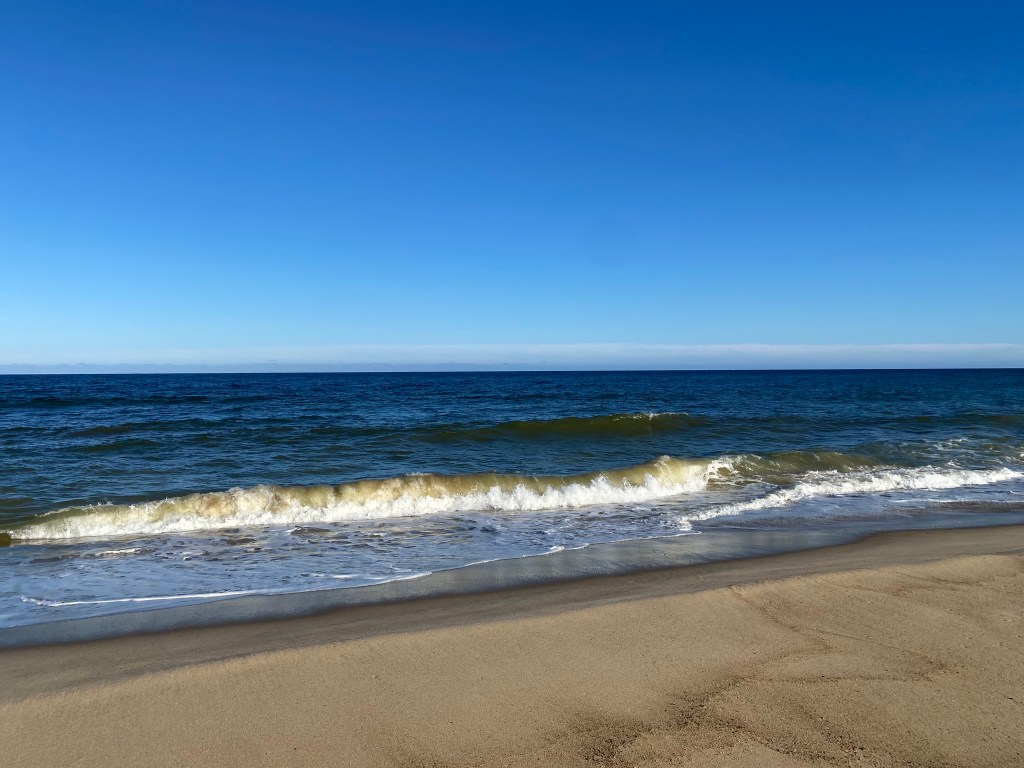



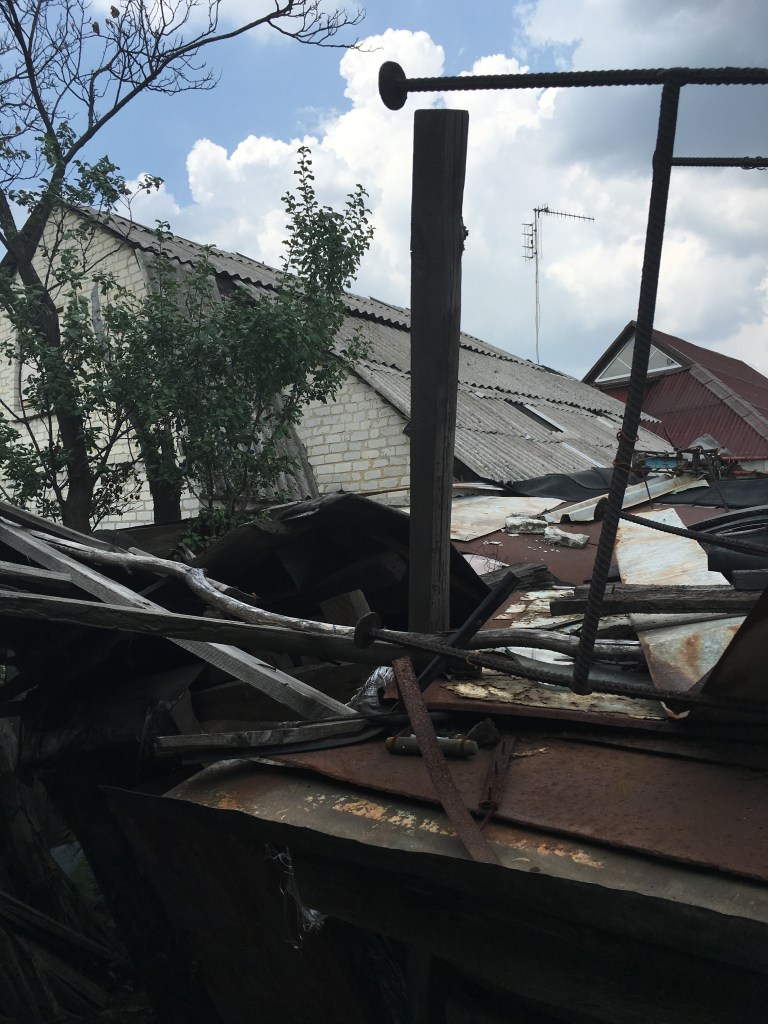

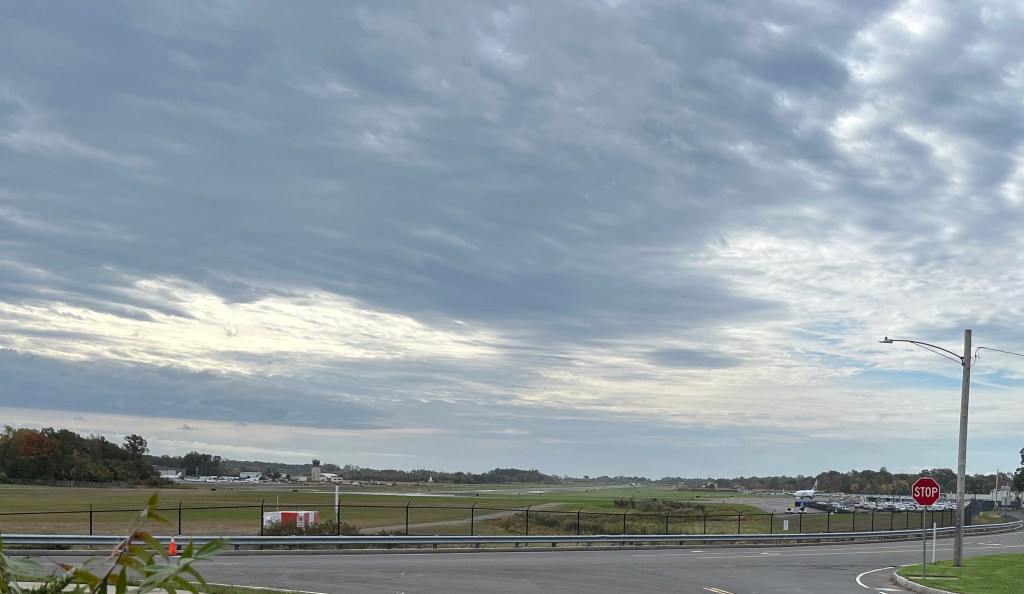


 The Local Blind Spot