One of the most frequent questions I field on the campaign trail is: “why is a large voluntary state guard necessary?” It’s a good question, a logical question: Connecticut and the U.S. are safe. The country has the most powerful military in the world and no nearby enemies. Even our faraway enemies threaten peripheral states such as Hawaii and Alaska, both of which were bombed (in the case of Alaska, briefly occupied) during WWII.
And in that safety bubble, few states feel more quintessentially safe than Connecticut, a place so boring and bereft of danger that most people driving south or north to the great cities of New York or Boston only ever pause at the rest stops off I-95 near Darien and near Clinton to grab a few gallons of overpriced gas. Connecticut, as everyone knows, is a drive through state — not a drive-to state. Why would a place that is so sleepy need a large voluntary state guard? What urgent need is there to rearm?
I was thinking about this recently while watching The Lord of the Rings trilogy for the first time since I saw it in theaters. I go to bed quite early and have been working my way through movies I watched when younger in bites of 20-30 minutes at a time, sound off, subtitles on, until I fall asleep.
Something that jumped out to me this time, watching the film, was how the theme of unreadiness repeats itself in the movie. This is emphasized as a major plot point in the second and third movies of the trilogy, and as I remember from reading the books decades ago as a youth, Tolkien does spend a lot of time underlining it — especially Theoden, the King of Rohan, who has been ensorcelled by Saruman and Grima Wyrmtongue, and Denethor, the mad Steward of Gondor, driven to despair by Sauron.
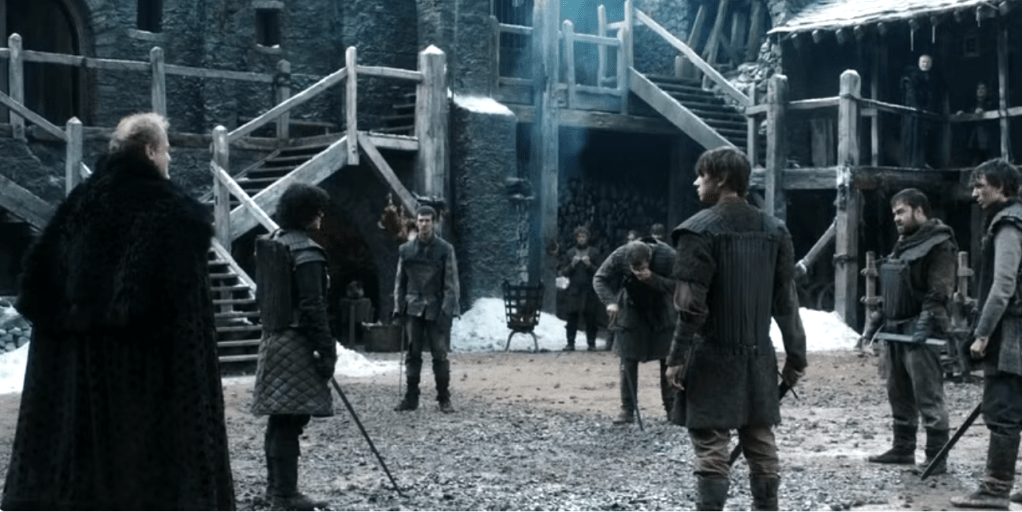
It reminded me of the Game of Thrones television series, and the Night’s Watch, which is introduced as this largely unnecessary relic force guarding a wall of ice far to the north. When I watched Game of Thrones originally, I don’t remember thinking to myself that the Night’s Watch reminded me of LOTR and the plot device of “force that is essential to the defense of the realm is seen as an unnecessary joke.” Deep in a campaign that is preaching the importance of specifically military preparation, the connection was immediately apparent this time around.
This trope is very recent. Reading ancient and early modern literature, one does not encounter the phenomenon of “the kingdom isn’t prepared” as a common plot device. Why not? Why, reading literature as varied as War and Peace and Beowulf and Romance of the Three Kingdoms and Far from the Madding Crowd and The Iliad — different stories from different cultures and eras — do we not find a Denethor or a Theoden — a leader who has disarmed their kingdom and left it open to the ravages of the enemy?
The answer is that prior to the 20th century, countries and kingdoms that disarmed, or did not arm effectively enough, simply vanished. They were gobbled up by their neighbors. Cities were sacked and enslaved, republics ended, kingdoms became part of more powerful empires. This happened routinely, so much so that when we look at France, we don’t think of it in the same way as we think of the UK (England, Scotland, Wales, and a piece of Ireland) — France finished its work of gobbling up Burgundy, Gascony, Anjou, and Normandy centuries ago. Today, France is — well — France.
France was nearly gobbled up and digested by its neighbor Germany twice during the 20th century. This wasn’t the last time in the 20th century we’d see something like this happen (China gobbled up Tibet), and it is (in fact!) part of the context in which Tolkien was writing LOTR, but to Europeans and Westerners, it was supposed to mark the end of an era in which things like that could happen. Stopping the Nazis and prying France (and Poland, and Ukraine, and Norway, and ultimately Germany itself) out of their jaws was terrible work in which tens of millions died and hundreds of millions had their lives upended. We built a massive system of alliances and a global economy dependent on those alliances in part to ward off the return of such a ruinous war.
The story of a culture or a people being unready to face a threat, paradoxically, resonates with us because it is our immediate history — it is a modern phenomenon. In the ancient world, in the world of the Middle Ages, we don’t see literary tropes around unreadiness because those countries, kingdoms, duchies, and principalities were constantly at war with each other. You see tropes such as cowardice and greed and incompetence — traits in a leader that would usually result in the country, republic, kingdom, duchy, or principality becoming subjugated by a neighbor or disappearing entirely. But there is no such thing as a kingdom where people live in privilege and comfort, free from the ravages of war, because such spaces simply did not exist prior to the 20th century.
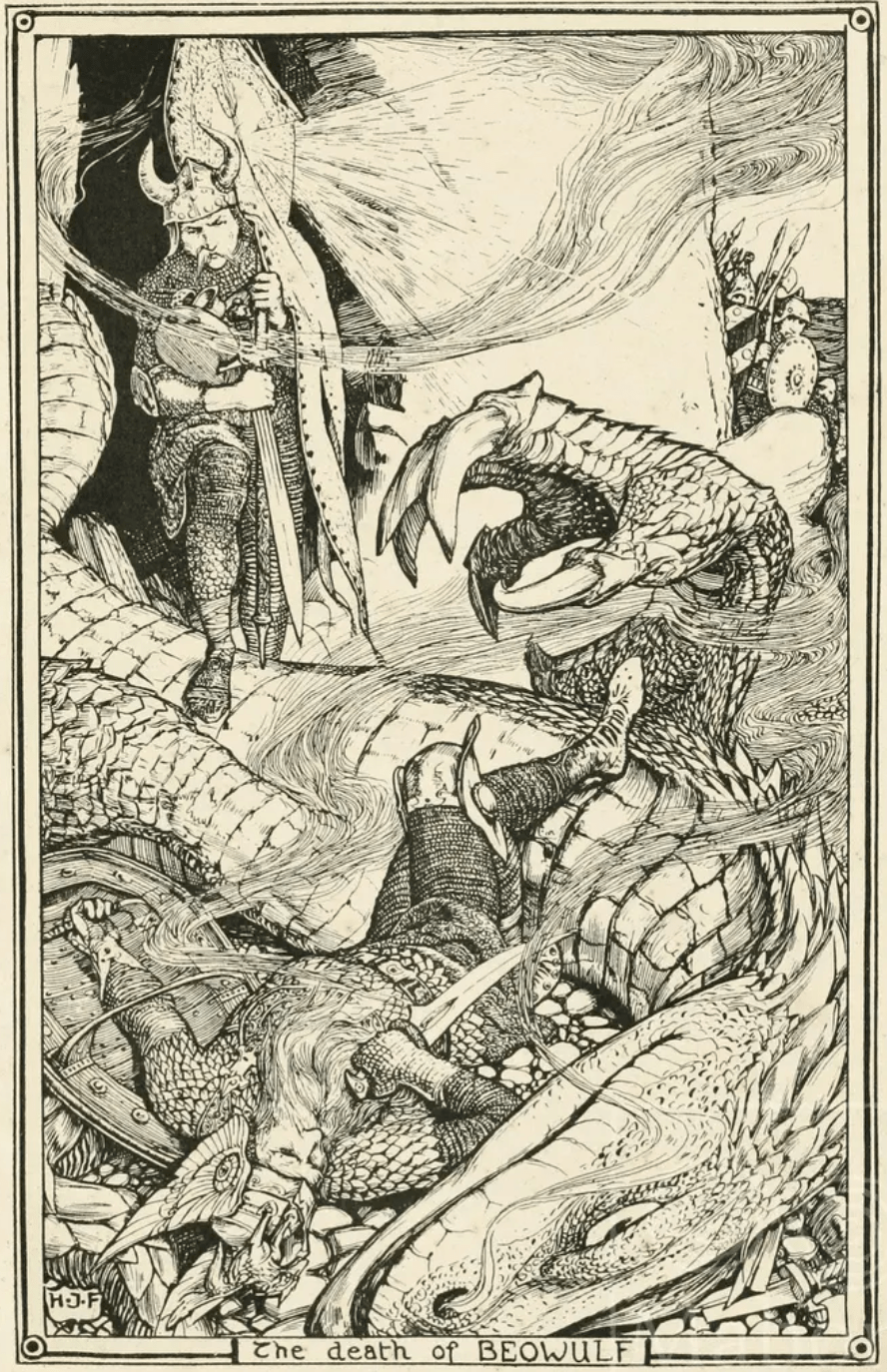
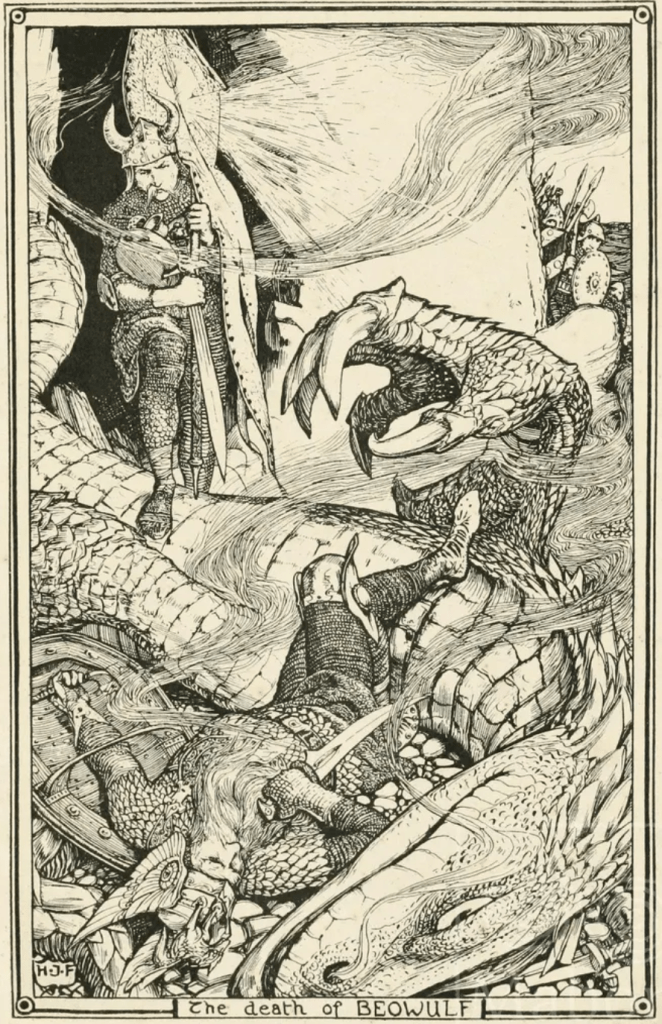
This is how in Beowulf, on which Tolkien drew for much inspiration for LOTR, the immediate problem facing the tribe Beowulf goes to help is not that their King, Hrothgar, isn’t ready or prepared: it’s that Hrothgar faces a monstrous enemy more powerful than his men. It’s not that the King of the Danes is weak. He commands the loyalty of his men. It’s that Hrothgar is overmatched. Beowulf, the hero, is stronger than Hrothgar, and also stronger than the monsters that beset the kingdom. This isn’t because Beowulf has trained more, or knows some special martial arts trick that the Danes don’t. Beowulf is strong enough to rip the arm off Grendel, the monster, who has in the story been ripping the arms off Hrothgar’s men. He’s just better.
Or take Achilles and Diomedes, part of the Greek host in The Iliad. Achilles has more fame today than Diomedes, but to the ancient Greeks, Diomedes had equal standing to Achilles — he wounds Ares in a fight and later ascends to divinity himself. The two of them are not (movies aside) better because they train more or dedicate themselves to the art and craft of war. Achilles is mostly impervious to physical damage (save for his heel) and Diomedes is stronger and more dexterous than other warriors. Of course they train, as do other soldiers. But their strength is natural; no amount of preparation will help a Trojan defeat Achilles — not even their best warrior, Hector. Paris, who ultimately kills Achilles with a poisoned arrow, has his hand guided by a vengeful god. The Greeks don’t win because they’re better prepared, or even because they’re more devout than the Trojans; it’s because — as was the case in Beowulf — they’re just better.
Contrast this with the problem of The Night’s Watch in GOT. Presumably if they had 10,000 or 25,000 troops instead of 1,000, their defense of the wall against the Walkers from the North would have been more effective. They’re unprepared because the people living in the lands guarded by the wall don’t appreciate the threat of the Walkers. In LOTR the enemy, Sauron, throws Denethor into despair, corrupts Saruman, and then through Saruman, places Theodon under a powerful spell. There is an enemy actively working to make sure that the people with the power to resist him do not or cannot — in spite of there being a large number of people willing and able to fight against Sauron, many of whom correctly perceive the threat to Rohan and Gondor, respectively. The challenge is organizing a defense that, once put in place, will succeed — and if not emplaced in time, will fail.
Literature reflects the biases of the author, but also the interests of its readers, of the audience; what literature we have from the past, certainly prior to the modern era, tends to be written by aristocrats or the powerful for aristocrats or the powerful. They’re stories, yes, but stories about interests and concerns. They reflect attitudes. And the stories of the past, at least as they concern war, are fundamentally different because they reflect a world where danger and disaster are just months away, always, and this is a fact widely known to all, most (or all) of whom have some direct experience with warfare.
This brings us back to the phenomenon in recent decades of this new trope: the country or kingdom is unprepared for a threat it does not or cannot recognize, and part of the protagonists’ struggle is to alert their countrymen or kinsmen that the threat is real. It’s a story that emerges from a context of relative safety and security that would have been difficult or impossible to imagine even two centuries ago. It emerges, 100 years ago, at the precise time that we (as in Americans, Connecticut residents) begin turning our backs on our militia system.
I don’t bring this up to say “because of fantasy novels we should form a large voluntary state guard for our defense,” I do it to point out that this trope in fantasy novels tracks with our belief that local military organization and preparedness is unnecessary. Maybe those who do not think it is necessary are correct, and those of us who’ve been to war and seen it spreading closer to our borders are just hyper-vigilant, or worried about nothing. It’s also possible that we are unready in a way none of our ancestors could have predicted. What a shame it will be if the very modest preparation we could make now, in peace, becomes necessary later, in war — at the very moment we have the least time in which to organize ourselves for defense!

